
Kitchen Remodel Cost: Budget Ranges and Where the Money Goes
What minor, mid-range, and full-gut kitchen remodels cost, how the budget splits across cabinets, labor, and counters, and where projects go over.
10 min read · Home Services Pro USA
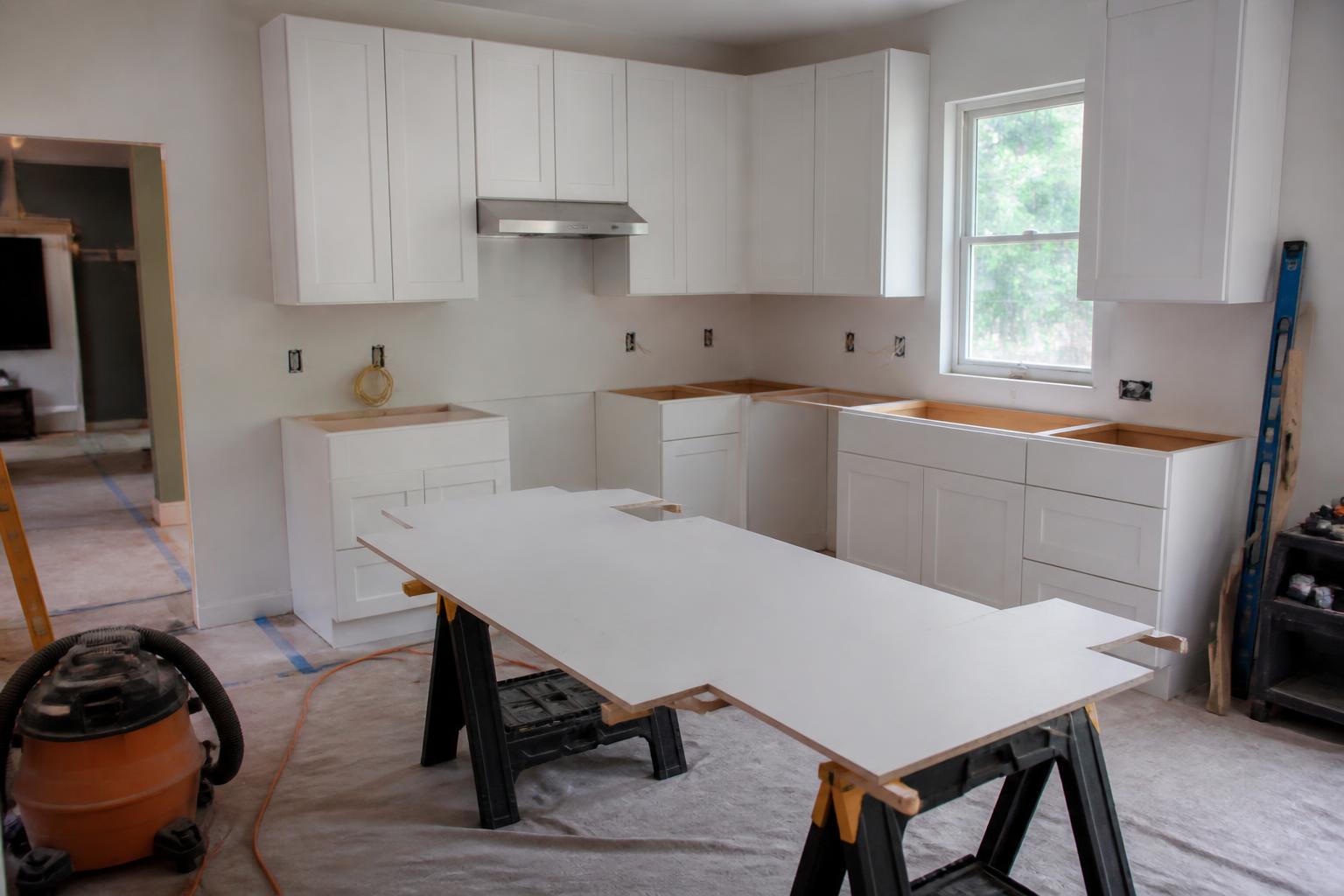
Quick answer
A minor kitchen refresh typically costs $10,000 to $25,000, a mid-range remodel $25,000 to $60,000, and a full gut with layout changes $60,000 to $150,000 or more. Cabinets and installation labor usually consume 45 to 60 percent of the budget, and moving plumbing, gas, or walls is the single biggest cost multiplier.
Key Takeaways
- Cabinets plus labor typically account for about half of a kitchen budget.
- Keeping the existing layout is the most reliable way to control cost.
- Long-lead items like custom cabinets can add two to four months before demolition should start.
- Plan a 10–20 percent contingency; older homes trend toward the high end.
Three Budget Tiers, Honestly Described
A minor remodel keeps the footprint and the boxes. You reface or repaint cabinets, replace countertops and the sink, update hardware and lighting, add a backsplash, and possibly swap appliances. Done well, this transforms how a kitchen looks for $10,000 to $25,000 and rarely requires permits beyond electrical work.
A mid-range remodel replaces cabinets with semi-custom lines, installs new counters, flooring, lighting, and appliances, and may relocate a single fixture or add an island. Most suburban kitchens land here, in the $25,000 to $60,000 range, and this tier is where the majority of homeowners feel they got a genuinely new kitchen.
A full gut moves walls, plumbing, and gas lines, upgrades electrical service, and often uses custom cabinetry and stone counters. Once you are opening walls, everything the inspector sees must come up to current code. Budgets of $60,000 to $150,000 are common, and high-cost metros or high-end finishes push well past that.
| Scope | Typical range | What it includes |
|---|---|---|
| Cosmetic refresh | $10,000 – $25,000 | Refacing, counters, backsplash, hardware, lighting |
| Mid-range remodel | $25,000 – $60,000 | New semi-custom cabinets, counters, flooring, appliances |
| Full gut / layout change | $60,000 – $150,000+ | Walls, plumbing and gas moves, electrical upgrade, custom cabinetry |
Where the Money Actually Goes
Across most mid-range kitchens, cabinetry runs 25 to 35 percent of the total and installation labor another 20 to 25 percent. Countertops account for roughly 10 percent, appliances 10 to 15 percent, flooring 5 to 10 percent, and the remainder is split among lighting, plumbing fixtures, backsplash, paint, permits, and project management.
Understanding that split changes how you negotiate. Shaving $2,000 off a $4,000 backsplash barely moves a $50,000 project. Choosing semi-custom cabinets over full custom, or a quartz remnant over a slab with heavy veining, moves it meaningfully.
Labor is the line item homeowners most often try to cut and most often regret cutting. Cabinet installation quality determines whether doors line up in year five; tile setting determines whether the backsplash grout cracks. These are skill-dependent trades where the cheapest bid rarely wins on a five-year horizon.
- Cabinets: 25–35% of budget
- Installation labor: 20–25%
- Countertops: ~10%
- Appliances: 10–15%
- Flooring, lighting, plumbing, permits: the rest
The Layout Decision Comes First
Every kitchen budget forks on one question: does the plumbing move? Relocating a sink means new supply and drain runs, potentially through a slab or a floor system, plus venting that must satisfy code. Moving a gas range means a new gas line and often a new hood run to the exterior. Removing a wall may mean a header, a beam, and an engineer's letter.
None of these are unreasonable — they are frequently what makes a bad kitchen good. But each one should be a deliberate decision made before demolition, priced explicitly, and drawn. Layout changes decided mid-project cascade through electrical, cabinetry, inspections, and schedule, and they are the number one driver of remodels that finish 40 percent over budget.
Our companion guide on planning a kitchen or bathroom remodel covers sequencing and lead times in more depth.
Lead Times and Living Through It
Custom cabinets commonly carry 8 to 16 week lead times, and specialty tile or imported stone can add weeks more. Appliance availability has stabilized compared to a few years ago, but panel-ready refrigerators and professional ranges still ship on their own schedule.
The practical rule is simple: do not start demolition until long-lead items are ordered and confirmed. A crew standing around waiting for cabinets costs money and momentum, and a half-finished kitchen in month three is where homeowners start making expensive decisions out of fatigue.
Plan the human side too. A kitchen remodel means four to twelve weeks without a kitchen. Set up a temporary station with a microwave, a coffee maker, and a refrigerator in another room, budget for more takeout than usual, and agree with your contractor on daily work hours and dust containment before day one.
Return on Investment and Resale Reality
Industry remodeling cost-versus-value studies consistently show minor kitchen refreshes recouping a larger share of their cost at resale than upscale full gut remodels. That is not an argument against a full remodel — it is an argument for matching the scope to how long you plan to stay and to the price ceiling of your neighborhood.
A $90,000 kitchen in a neighborhood where homes top out at $350,000 will not return proportionally. The same kitchen in a home you will live in for fifteen years is a lifestyle purchase, and that is a perfectly good reason to build it.
If resale within two or three years is likely, prioritize the changes buyers notice immediately: cabinet condition and color, counter material, lighting, and flooring continuity with adjacent rooms.
Controlling the Budget Without Cutting Quality
Keep the layout. Choose semi-custom cabinets in a standard door style and add character with hardware and paint. Use a durable quartz in a simple pattern rather than a dramatic slab that requires bookmatching. Reserve splurges for the two or three things you touch daily — the faucet, the range, the cabinet drawer glides.
Ask your contractor to identify every allowance in the estimate. Allowances are placeholders, not prices, and the gap between a $4,000 tile allowance and the tile you actually fall in love with is a common source of overruns.
Finally, protect a 10 to 20 percent contingency and do not spend it on upgrades in week one. Homes built before 1980 routinely reveal old wiring, failed subfloor, or plumbing that no longer meets code, and that contingency exists for exactly those discoveries.
Our guide on how much to budget for your project walks through setting a realistic range and a hard ceiling before you talk to anyone.
Permits, Inspections, and Code Upgrades
Cosmetic work rarely requires a permit, but almost any kitchen project that touches electrical circuits, plumbing lines, gas piping, structural framing, or exhaust ventilation does. Your contractor should pull the permit in their name, schedule inspections, and meet the inspector on site. A contractor who suggests skipping a required permit is telling you something important about how they work.
Permits also trigger code compliance in the area being renovated. In practice that often means GFCI protection at countertop receptacles, adequate small-appliance circuits, arc-fault protection, and a properly vented range hood. Older homes with two-wire ungrounded circuits or an undersized panel can face several thousand dollars of electrical work that has nothing to do with the cabinets you picked.
None of this is wasted money. Unpermitted kitchen work routinely surfaces during a home sale, and buyers or their lenders can demand retroactive permitting, exposed inspections, and corrections at the worst possible moment. Paying a few hundred dollars in permit fees during the project is far cheaper than negotiating it at closing.
Ask during the estimate stage which permits the project will require, who pulls them, whether fees are included in the quote or billed separately, and how inspection scheduling affects the timeline. Inspections create natural pause points, and a contractor who has planned for them keeps the crew productive around them.
Finding the Right Remodeler
Kitchen remodeling coordinates six or more trades. The contractor's project management ability matters as much as their carpentry. Ask how many kitchens they completed in the last twelve months, who the daily point of contact is, and how change orders are documented and approved.
Request addresses or photos of recent local kitchens, and ask for at least two references from projects completed more than a year ago — that is when workmanship problems surface.
When you are ready for quotes, you can start from our kitchen remodeling page, explore full-home remodeling, or describe your project once on the Home Services Pro USA homepage and let us match you with professionals in your area.
Frequently Asked Questions
- How much does an average kitchen remodel cost?
- Nationally, most mid-range kitchen remodels fall between $25,000 and $60,000. Cosmetic refreshes start around $10,000 and full gut remodels with layout changes commonly exceed $60,000.
- How long does a kitchen remodel take?
- Expect four to six weeks of on-site work for a mid-range remodel and eight to twelve weeks or more for a full gut, plus two to four months of design and cabinet lead time before demolition begins.
- Is it cheaper to reface or replace kitchen cabinets?
- Refacing typically costs 40 to 60 percent less than full replacement and works well when the existing boxes are solid and the layout stays the same. Replace when boxes are damaged, sized poorly, or the layout changes.
- Do I need a permit for a kitchen remodel?
- Cosmetic work usually does not require a permit, but electrical, plumbing, gas, structural, and ventilation changes almost always do. Your contractor should pull the permits and meet the inspector.
- What percentage of a kitchen budget goes to cabinets?
- Cabinetry typically consumes 25 to 35 percent of a kitchen remodel budget, making it the single largest line item and the most effective place to adjust cost.