
Water Heater Replacement Cost: Tank vs Tankless, and When to Replace
Installed prices for gas, electric, hybrid, and tankless water heaters, the warning signs that yours is failing, and how to size the right unit.
9 min read · Home Services Pro USA
Quick answer
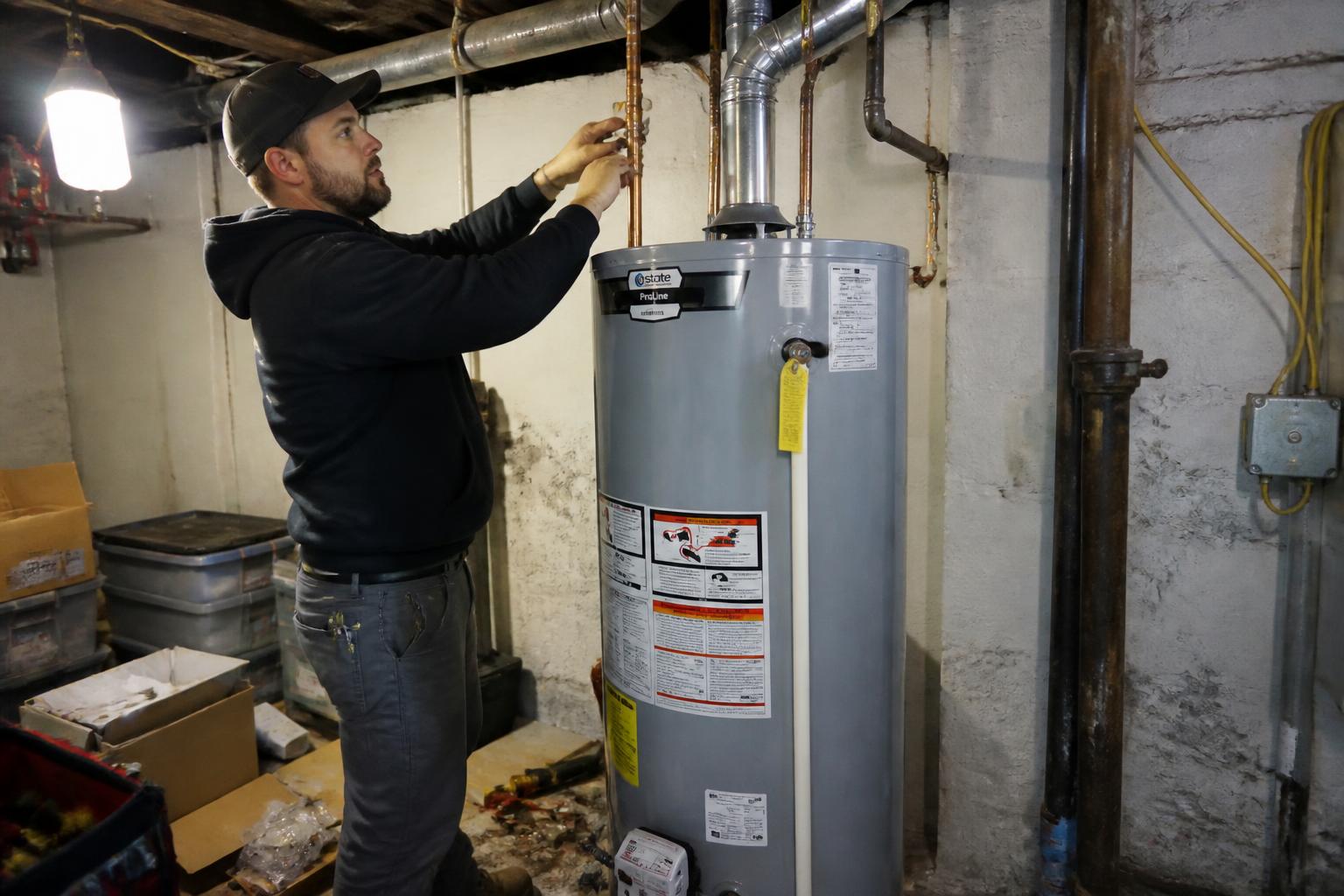
A standard tank water heater replacement typically costs $1,200 to $2,800 installed — around $1,100 to $2,200 for electric and $1,400 to $3,000 for gas. Tankless units usually run $3,000 to $6,500 installed because of venting and gas line upgrades, and heat pump (hybrid) models commonly land at $2,500 to $5,000 before rebates.
Key Takeaways
- Tank water heaters last 8 to 12 years; tankless units often last 20 or more.
- Rusty water, popping or rumbling sounds, and moisture at the base are the three clearest failure signals.
- Tankless conversions add cost for venting, gas line sizing, and sometimes electrical — not just the unit.
- Heat pump water heaters cut electric water heating energy use dramatically but need space, air volume, and a drain.
- Replacing before failure is far cheaper than an emergency replacement plus water damage cleanup.
What Replacement Costs by Type
The invoice for a water heater has three parts: the unit, the labor, and the code-required extras. That last category surprises people. Depending on your jurisdiction, a replacement may trigger a new expansion tank, seismic strapping, a drain pan with a routed drain line, updated venting, a service disconnect, or an upgraded shutoff — items that may not have been required when the original unit was installed.
A like-for-like swap in an accessible basement with modern connections is the cheap scenario. A unit in a tight attic or a finished closet, or one requiring a change in fuel type or venting strategy, is the expensive one.
| Type | Installed cost | Typical lifespan |
|---|---|---|
| Electric tank (40–50 gal) | $1,100 – $2,200 | 8 – 12 years |
| Gas tank (40–50 gal) | $1,400 – $3,000 | 8 – 12 years |
| High-efficiency condensing gas tank | $2,200 – $4,000 | 10 – 15 years |
| Heat pump / hybrid electric | $2,500 – $5,000 | 12 – 15 years |
| Gas tankless | $3,000 – $6,500 | 20+ years |
| Electric tankless (point of use) | $800 – $2,500 | 15 – 20 years |
Signs Your Water Heater Is Failing
Rust-colored hot water is the clearest warning. It usually means the anode rod is exhausted and the steel tank lining has begun to corrode. Once a tank corrodes through, it does not leak politely — it releases forty gallons onto the floor.
Rumbling, popping, or kettling sounds indicate sediment hardened on the tank bottom. The burner or element now heats through a mineral layer, which wastes energy, stresses the steel, and accelerates failure. Annual flushing prevents most of this and is one of the highest-value maintenance habits a homeowner can adopt.
Moisture, mineral crust, or rust at the base of the tank means a slow leak has already started. Unlike a dripping valve, a leaking tank cannot be repaired. Age is the other honest signal: a unit past ten years old that is showing any of these symptoms should be replaced on your schedule, not on its own.
Not every symptom is terminal. Lukewarm water can be a failed heating element, thermostat, dip tube, or thermocouple — repairs typically costing $150 to $600. A plumber should be able to tell you within a visit whether you are looking at a repair or a replacement.
Tank vs Tankless: The Honest Comparison
Tankless water heaters heat on demand, so they never run out, take up little space, and commonly last twice as long as a tank. In an efficiency comparison against a standard gas tank, a tankless unit typically uses 20 to 30 percent less energy in a moderate-usage household.
The catch is the conversion. Many gas tankless units need a larger-diameter gas line, dedicated stainless or PVC venting, and a condensate drain. If your existing tank vents into a shared masonry chimney, that chimney may need relining or abandonment. These are real costs that have nothing to do with the box on the wall, and they are why tankless quotes vary so widely between homes.
Tankless also has a flow ceiling. A unit is rated by how much temperature rise it can deliver at a given gallons-per-minute. In cold-groundwater regions, the same unit that comfortably serves a Florida home may struggle to run two showers simultaneously in Minnesota. Sizing must account for your incoming water temperature, not just fixture count.
For a household replacing a working tank purely to save money, the payback on a full tankless conversion is often ten years or more. For a household expanding, remodeling, tired of running out of hot water, or reclaiming closet space, the case is much stronger.
Heat Pump Water Heaters
Hybrid heat pump water heaters move heat from surrounding air into the water rather than generating it with resistance elements. They can cut electric water heating energy use by roughly 60 to 70 percent, which makes them the single biggest efficiency upgrade available in most all-electric homes.
They have requirements, though. They need adequate air volume around them — often cited as roughly 700 to 1,000 cubic feet or a louvered enclosure — a condensate drain, and reasonable ambient temperature. They also cool and dehumidify the space they sit in, which is a bonus in a humid Southern garage and a nuisance in a finished conditioned room. They run with an audible fan.
Federal efficiency credits and utility rebates frequently apply. Confirm current program terms before budgeting, because the net cost after incentives can approach that of a conventional electric tank.
Sizing the Right Unit
For tank models, first-hour rating matters more than raw gallon capacity. It measures how much hot water the unit can deliver in the busiest hour, combining stored volume with recovery rate. A 40-gallon gas unit with a strong burner can outperform a 50-gallon electric one during a morning rush.
As a rough starting point: one to two people are usually served by a 30 to 40 gallon tank, three to four people by 40 to 50 gallons, and five or more by 50 to 80 gallons or a tankless unit. Large soaking tubs and multi-head showers change the math considerably.
For tankless, size by temperature rise at peak simultaneous flow. Add up the fixtures likely to run at once, then confirm the unit can deliver that flow at your local groundwater temperature in January, not in July.
- 1–2 people: 30–40 gallon tank
- 3–4 people: 40–50 gallon tank
- 5+ people: 50–80 gallon tank or a properly sized tankless
- Tankless: size by GPM at your coldest incoming water temperature
Hiring and Comparing Quotes
Use a licensed plumber and confirm the permit. Water heater replacement is permitted work in most jurisdictions because it involves gas, combustion venting, or a substantial electrical load, plus a pressure-relief safety device. Unpermitted installations turn up during home inspections at resale.
Ask each quote to list the model number and capacity, whether an expansion tank and drain pan are included, what venting work is required, haul-away of the old unit, the permit fee, and both the manufacturer's warranty and the plumber's labor warranty.
Emergency replacement always costs more and rules out shopping around. If your unit is past nine or ten years old, getting quotes now on a planned schedule is the cheapest version of this project you will ever get.
Our guides on comparing estimates and questions to ask before hiring apply here too. To get matched with local plumbers, describe the job once through Home Services Pro USA or start from our water heater page.
Frequently Asked Questions
- How much does it cost to replace a 50-gallon water heater?
- A 50-gallon electric tank usually costs $1,300 to $2,200 installed, and a 50-gallon gas tank $1,600 to $3,000 installed. Code-required items such as an expansion tank, drain pan, or venting updates can add $200 to $800.
- How long does a water heater last?
- Conventional tank water heaters last 8 to 12 years, heat pump models 12 to 15 years, and tankless units 20 years or more. Annual flushing and replacing the anode rod extend tank life significantly.
- Is tankless worth it?
- Tankless is worth it when you want endless hot water, need the floor space, or are already upgrading gas and venting. If you are simply swapping a working tank to save money, the payback often exceeds ten years.
- How long does water heater installation take?
- A like-for-like tank swap typically takes two to four hours. A tankless conversion requiring new gas line sizing and venting usually takes a full day, sometimes two.
- Can I replace a water heater myself?
- It is legal for homeowners in some jurisdictions but generally inadvisable. The work involves gas or high-amperage electrical connections, combustion venting, and a pressure-relief device. Mistakes create carbon monoxide, fire, flood, or scald risks, and unpermitted work can affect insurance and resale.