
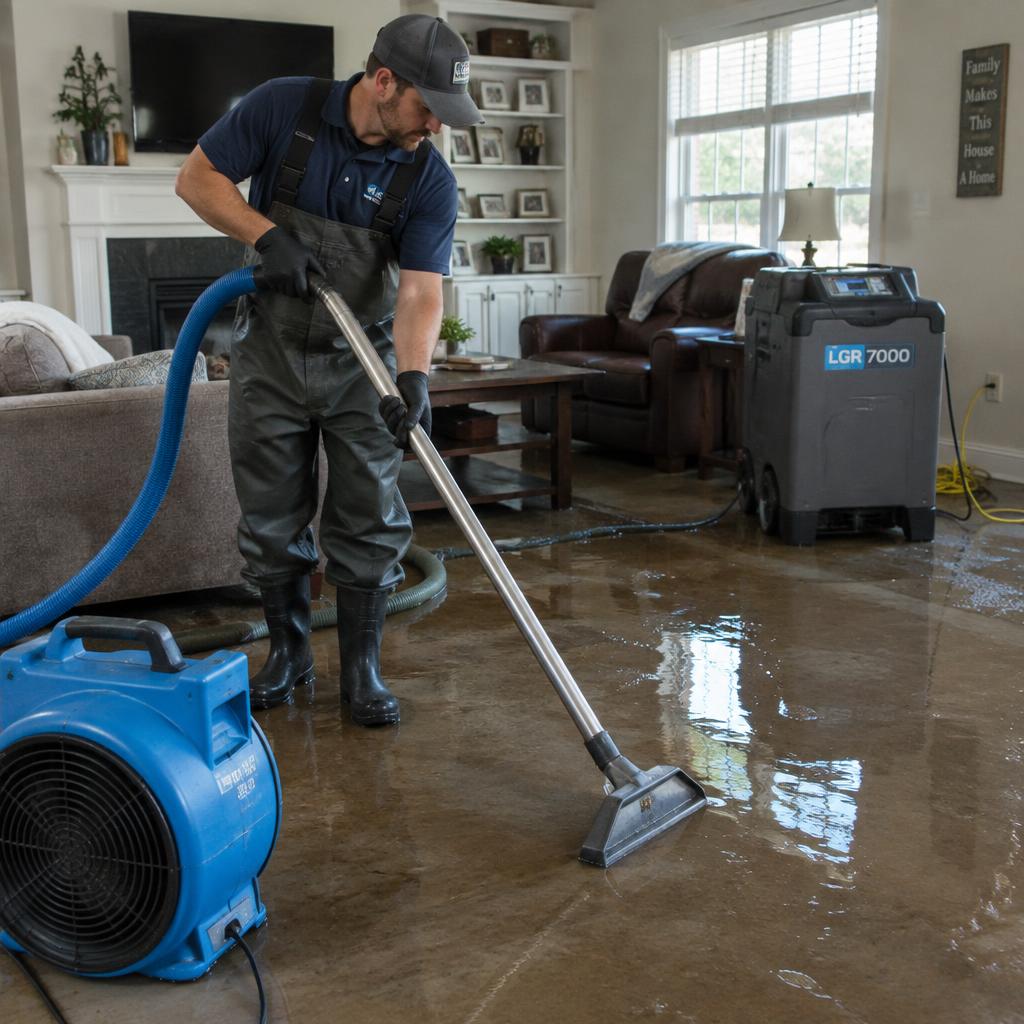
Water Damage Restoration
Burst pipes, appliance failures, and roof leaks can soak drywall, flooring, and insulation within hours. Professional restoration starts with water extraction, then structural drying with air movers and dehumidifiers, followed by cleaning and rebuilding. Fast response matters: the longer materials stay wet, the more likely mold becomes a factor.
Fire and Smoke Damage
Even a small fire leaves soot and smoke odor throughout a home. Restoration crews handle debris removal, soot cleaning, odor treatment, and reconstruction of damaged areas. Document everything before cleanup begins if you plan to file an insurance claim.
Mold Concerns
Visible mold or a persistent musty smell usually points to a moisture problem that needs fixing first. Remediation typically involves containment, removal of affected materials, HEPA filtration, and addressing the water source so the problem does not return.
How Restoration Estimates Work
Estimates depend on the affected square footage, the category of water or damage involved, how long materials have been wet, and what must be demolished versus dried in place. Many restoration companies work directly with insurance carriers and can explain the claims process.