
AC Replacement Cost: Central Air Prices by Size and Efficiency
A new central air conditioner runs $4,000 to $9,000 installed. Here's what SEER2 ratings, tonnage, and refrigerant changes mean for your quote.
10 min read · Home Services Pro USA
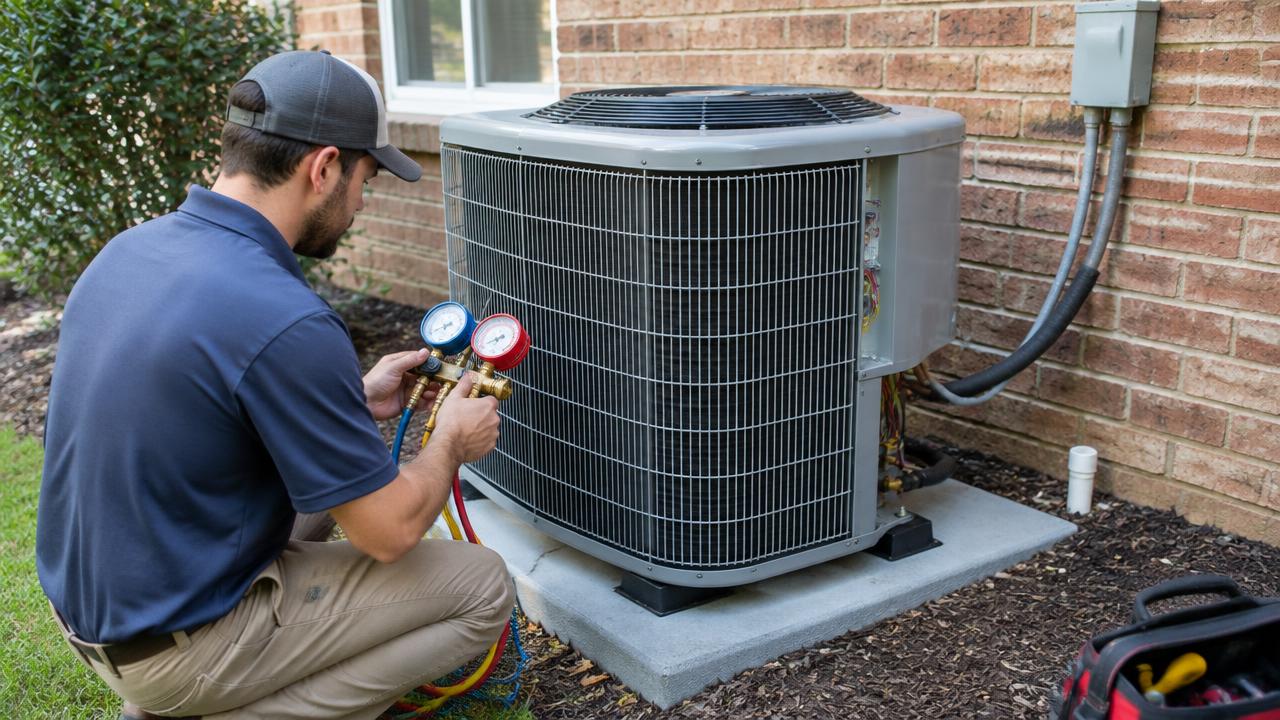
Quick answer
Most U.S. homeowners spend $4,000 to $9,000 to replace a central air conditioner, with a national midpoint near $6,000 for a standard-efficiency 3-ton system installed. Budget 14.3 SEER2 systems start around $3,800, mid-range 16–17 SEER2 systems run $5,500 to $8,000, and premium variable-speed systems can reach $12,000. Replacing the furnace at the same time adds $2,500 to $5,000 but saves a labor visit.
Key Takeaways
- Central AC installed: $4,000–$9,000 for most homes; premium variable-speed systems reach $12,000.
- System size (tonnage) should come from a load calculation, not the size of your old unit.
- SEER2 is the current efficiency standard — 14.3 is the Southern minimum; 16+ is where real savings begin.
- If your AC uses R-22 refrigerant, replacement almost always beats repair — the refrigerant is no longer produced.
- Replacing AC and furnace together saves labor and guarantees matched components.
What a New Central AC Costs in 2026
Central air conditioner pricing has three levers: size (tonnage), efficiency (SEER2 rating), and compressor type (single-stage, two-stage, or variable-speed). A typical 3-ton system — right for many 1,600 to 2,000 square foot homes — installed runs $4,000 to $6,500 at minimum efficiency, $5,500 to $8,000 at 16 to 17 SEER2, and $8,000 to $12,000 for a premium variable-speed system.
Tonnage moves the price in steps. A 1.5-ton system for a small home or condo might install for $3,500 to $5,500; a 5-ton system for a large two-story home runs $6,500 to $10,000 or more. The equipment cost difference between sizes is real but modest — labor stays roughly constant, which is why price doesn't scale linearly with tonnage.
Heat pumps deserve a mention in any 2026 AC conversation. A heat pump is an air conditioner that also runs in reverse to heat, and in much of the country it can replace both the AC and the furnace. Installed pricing overlaps with AC-plus-furnace territory ($6,000 to $14,000), and federal tax credits of up to $2,000 can apply. Ask any quoting contractor to price both options.
| System tier | SEER2 | Installed cost | Compressor |
|---|---|---|---|
| Builder/basic | 14.3 – 15 | $3,800 – $6,000 | Single-stage |
| Mid-range | 16 – 17 | $5,500 – $8,000 | Two-stage |
| Premium | 18 – 21+ | $8,000 – $12,000 | Variable-speed |
| Heat pump equivalent | 15.2 – 20+ | $6,000 – $14,000 | Varies |
SEER2 and Compressor Types, in Plain English
SEER2 (Seasonal Energy Efficiency Ratio 2) measures cooling output per unit of electricity across a season — higher is cheaper to run. The federal minimum is 14.3 SEER2 in the South and 13.4 in the North. Moving from 14.3 to 17 SEER2 cuts cooling electricity use by roughly 15 to 20 percent, which matters most in hot climates where the AC runs eight months a year.
Compressor type is what you actually feel. A single-stage compressor is either on at full blast or off — it cools in bursts and humidity control is mediocre. A two-stage compressor runs at low speed most of the time, with longer, quieter cycles and better dehumidification. A variable-speed compressor modulates continuously, delivering the steadiest temperatures, best humidity control, and quietest operation — at a premium price.
In humid climates (the Southeast, Gulf Coast, and much of the Midwest in summer), the humidity control of a two-stage or variable-speed system is often worth more than the headline efficiency number. In dry climates, a mid-tier single-stage or two-stage unit is frequently the value pick.
Installation Factors That Move the Price
The refrigerant line set connecting the indoor and outdoor units may need replacement — modern refrigerants (R-454B and R-32 in 2026 equipment) require clean, correctly sized lines. Reusing an old line set saves money where it's legal and practical; replacing it adds $500 to $1,500 depending on the run.
Electrical work appears on many invoices: older homes sometimes need a new disconnect, a larger breaker, or a dedicated circuit for the new condenser. Budget $200 to $800 when flagged.
Ductwork condition determines whether your new system performs to its rating. Leaky or undersized ducts can waste 20 to 30 percent of cooling capacity. Sealing and modest repairs run $500 to $2,000 and are usually money well spent. Our HVAC repair or replace guide covers the whole-system view.
Access matters too. A condenser on a ground-level pad beside the house is the baseline; rooftop units, tight side yards, and attic air handlers all add labor.
Repair or Replace: The Rules of Thumb
Air conditioners last 12 to 17 years with maintenance. Apply the 50 percent rule: if a repair exceeds half the cost of a new system and the unit is past mid-life, replace it. Compressor failure on a unit older than ten years almost always means replacement — the repair is the most expensive one there is.
Refrigerant is the other deciding factor. Systems using R-22 (Freon, phased out of production) face refrigerant costs that make even moderate leak repairs poor investments. Newer R-410A systems are also being phased down, but refrigerant remains available; repair decisions there should follow the normal cost rules.
Ready for real numbers? Get matched with local HVAC contractors and compare free estimates through Home Services Pro USA — it takes about two minutes and there's no obligation to hire.
Frequently Asked Questions
- How much does it cost to replace a central air conditioner?
- Central AC replacement costs $4,000 to $9,000 installed for most homes, with a national midpoint near $6,000 for a standard 3-ton system. Premium variable-speed systems reach $12,000. Size, SEER2 efficiency rating, compressor type, and ductwork condition drive the final price.
- What SEER2 rating should I buy?
- For most homeowners, 16 to 17 SEER2 is the value sweet spot — meaningfully cheaper to run than the 14.3 minimum without the premium price of 20+ SEER2 variable-speed systems. In hot climates with long cooling seasons, higher ratings pay back faster.
- Should I replace my furnace and AC at the same time?
- If both are 12+ years old, yes — the indoor coil sits on the furnace, so replacing together saves a full labor visit and ensures matched, efficient components. If the furnace is significantly newer, replacing the AC alone is usually fine.
- Is a heat pump worth considering instead of a new AC?
- In most of the country, yes. A heat pump cools exactly like an air conditioner and also heats, potentially replacing your furnace. Federal tax credits up to $2,000 can apply, and modern cold-climate models work well below freezing. Ask contractors to price both options.