
Furnace Replacement Cost: Gas, Electric, and Oil Prices Explained
A new furnace is a $3,000 to $8,000 decision most homeowners make once every two decades. Here's what drives the price and how to size up a quote.
10 min read · Home Services Pro USA
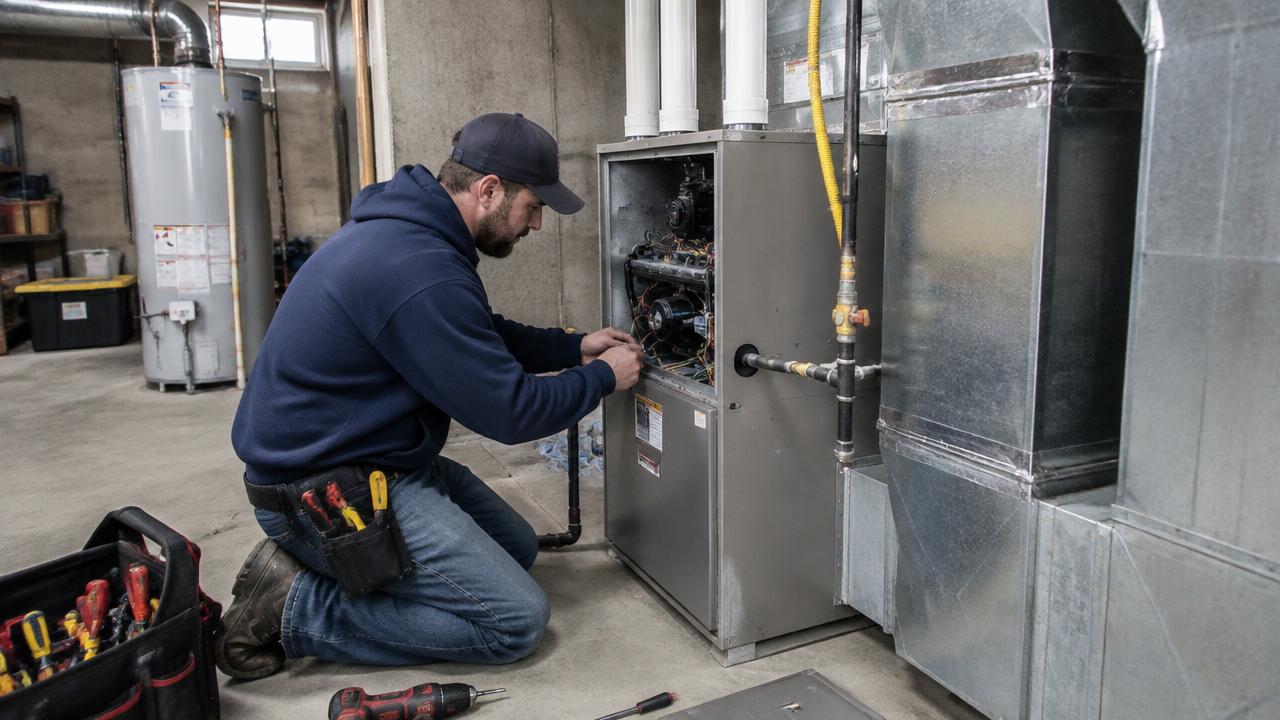
Quick answer
Most U.S. homeowners spend $3,000 to $8,000 to replace a furnace, with a national midpoint near $5,000 for a standard gas furnace installed. A basic 80% AFUE gas furnace runs $3,000 to $5,000 installed, while a high-efficiency 96%+ condensing model runs $4,500 to $8,000. Electric furnaces cost $2,000 to $4,500 installed, and oil furnaces $4,000 to $9,000. Ductwork repairs, venting changes, and thermostat upgrades add to the total.
Key Takeaways
- Standard gas furnace installed: $3,000–$5,000. High-efficiency (96%+ AFUE): $4,500–$8,000.
- Electric furnaces are cheapest to install ($2,000–$4,500) but usually cost more to run than gas.
- The 50% rule: if a repair costs more than half the price of a new furnace and the unit is past mid-life, replace it.
- Proper sizing (a Manual J load calculation) matters more than brand — an oversized furnace short-cycles and wears out early.
- High-efficiency furnaces need PVC venting and a condensate drain, which adds labor in homes with old metal flues.
Furnace Replacement Cost by Fuel Type
Gas furnaces dominate American homes and offer the best balance of installed cost and operating cost where natural gas is available. A standard 80% AFUE unit (meaning 80 cents of every fuel dollar becomes heat) installed runs $3,000 to $5,000. Stepping up to a 96 to 98% AFUE condensing furnace runs $4,500 to $8,000 installed but can cut heating fuel use by 15 to 20 percent — meaningful in cold climates with long heating seasons.
Electric furnaces are the cheapest to install at $2,000 to $4,500 because they need no gas line, flue, or combustion air. The tradeoff is operating cost: in most of the country, electric resistance heat costs two to three times more per BTU than gas. They make the most sense in mild climates or homes without gas service where a heat pump isn't practical.
Oil furnaces, concentrated in the Northeast, run $4,000 to $9,000 installed. Fuel oil prices are volatile, and annual maintenance is heavier than gas, but a modern oil furnace is far cleaner and more efficient than the unit it typically replaces.
Propane furnaces mirror gas furnace pricing for the equipment ($3,000 to $6,500 installed) but require a tank and carry higher fuel costs than natural gas in most markets.
| Furnace type | Installed cost | Best for |
|---|---|---|
| Gas, 80% AFUE | $3,000 – $5,000 | Mild-to-moderate climates, budget installs |
| Gas, 96%+ AFUE condensing | $4,500 – $8,000 | Cold climates, long payback horizon |
| Electric | $2,000 – $4,500 | Mild climates, homes without gas service |
| Oil | $4,000 – $9,000 | Northeast homes on existing oil service |
| Propane | $3,000 – $6,500 | Rural homes without natural gas lines |
What Else Shows Up on the Invoice
The furnace itself is often only 50 to 60 percent of the installed price. Labor, sheet metal transitions, venting, gas line work, electrical, condensate drainage, the thermostat, permits, and haul-away make up the rest. This is why 'the same furnace' can be quoted $1,500 apart by two contractors — the scope around the box differs.
High-efficiency condensing furnaces vent through PVC pipe rather than a metal flue and produce acidic condensate that must be drained. In a home with an old chimney flue, that means running new vent pipe — often a few hundred dollars of additional labor, and more if the routing is difficult.
Ductwork is the silent budget item. If your ducts are undersized, leaky, or poorly insulated, a new high-efficiency furnace connected to bad ducts performs like a mediocre one. Sealing and modest modifications typically run $500 to $2,000; significant replacement runs $3,000 to $7,000 or more.
If your air conditioner is the same age as the furnace, ask about replacing both together. The indoor coil sits on top of the furnace, so doing both at once saves a full labor visit and ensures the components are matched — see our HVAC repair or replace guide for the full decision framework.
Sizing: Why Bigger Is Worse
Furnaces are sized in BTUs, and the correct size comes from a Manual J load calculation — a room-by-room assessment of your home's insulation, windows, orientation, and air leakage. Rule-of-thumb sizing by square footage alone is how homes end up with furnaces 50 percent too large.
An oversized furnace heats the house so fast that it shuts off before completing a proper cycle, then restarts minutes later. This short-cycling means uneven temperatures, more noise, higher fuel use, and a heat exchanger that wears out years early. If a contractor quotes a size without measuring anything, that is a red flag — ask what load calculation they used.
Repair or Replace: The Decision Framework
Furnaces typically last 15 to 20 years with maintenance. Two rules of thumb cover most decisions. First, the 50 percent rule: if a repair costs more than half the price of a new unit and the furnace is past the middle of its expected life, replacement usually wins. Second, the frequency test: if you've paid for two or more repairs in the last two heating seasons, the failures tend to accelerate.
One repair is never optional: a cracked heat exchanger. It can leak carbon monoxide into the airstream, and on an older furnace the repair cost approaches replacement cost anyway. If a technician condemns your heat exchanger, get a second opinion promptly — but treat it as a safety issue, not a sales tactic, until proven otherwise.
When you're ready for quotes, get matched with local HVAC contractors through Home Services Pro USA — free for homeowners, with no obligation to hire.
Frequently Asked Questions
- How much does it cost to replace a gas furnace?
- A standard 80% efficiency gas furnace costs $3,000 to $5,000 installed. A high-efficiency 96%+ AFUE condensing model runs $4,500 to $8,000 installed, including new PVC venting and condensate drainage. Ductwork repairs and permits are usually additional.
- Is a high-efficiency furnace worth the extra cost?
- In cold climates with long heating seasons, a 96%+ AFUE furnace typically pays back its $1,500 to $3,000 premium in 5 to 10 years through lower gas bills. In mild climates where the furnace runs fewer hours per year, a standard 80% unit often makes more financial sense.
- How long does a furnace last?
- A well-maintained gas furnace lasts 15 to 20 years; electric furnaces can reach 20 to 30. Annual maintenance — filter changes, burner cleaning, and a safety inspection — is the biggest factor in reaching the high end of that range.
- Can I replace just the furnace and keep my old AC?
- Yes, if the air conditioner is significantly newer. The two share a blower and the indoor coil sits on the furnace, so mismatched ages can cost some efficiency, but a competent installer can pair them. If both are 12+ years old, replacing together usually saves money overall.