
Bathroom Remodel Cost: What You'll Pay by Scope and Size
Powder room refresh, full guest bath, or primary suite gut — here's what each tier really costs, where the money goes, and how to avoid the classic overruns.
10 min read · Home Services Pro USA
Quick answer
Most U.S. homeowners spend $6,000 to $18,000 on a standard bathroom remodel, with a national midpoint near $12,000. A cosmetic refresh of a small hall bath can land at $3,000 to $7,000, while a full-gut primary suite with a custom tiled shower and moved plumbing commonly runs $25,000 to $60,000 or more. Labor is typically 40 to 65 percent of the total.
Key Takeaways
- Cosmetic refresh: $3,000–$7,000. Mid-range full remodel: $10,000–$25,000. Primary suite gut: $25,000–$60,000+.
- Moving the toilet, shower, or tub drain is the single biggest cost fork in any bathroom project.
- Tile work is labor-dense: a custom curbless shower can cost more in labor than the tile costs in material.
- Budget a 15 to 20 percent contingency — hidden water damage behind tile and under subfloor is common.
- Waterproofing and ventilation are invisible line items that decide whether the remodel lasts ten years or two.
The Three Bathroom Remodel Tiers
Bathroom pricing makes far more sense once you stop thinking in square feet and start thinking in tiers. Contractors quote fundamentally different jobs depending on whether the walls stay closed, come down to the studs, or move entirely.
A cosmetic refresh keeps every fixture where it is. You are replacing the vanity, mirror, lighting, toilet, faucet, and possibly the floor, then painting. No plumbing lines move, no walls open, and the work is usually done in three to seven days. This tier delivers most of the visual payoff for the least money, and it is where homeowners preparing to sell should usually start.
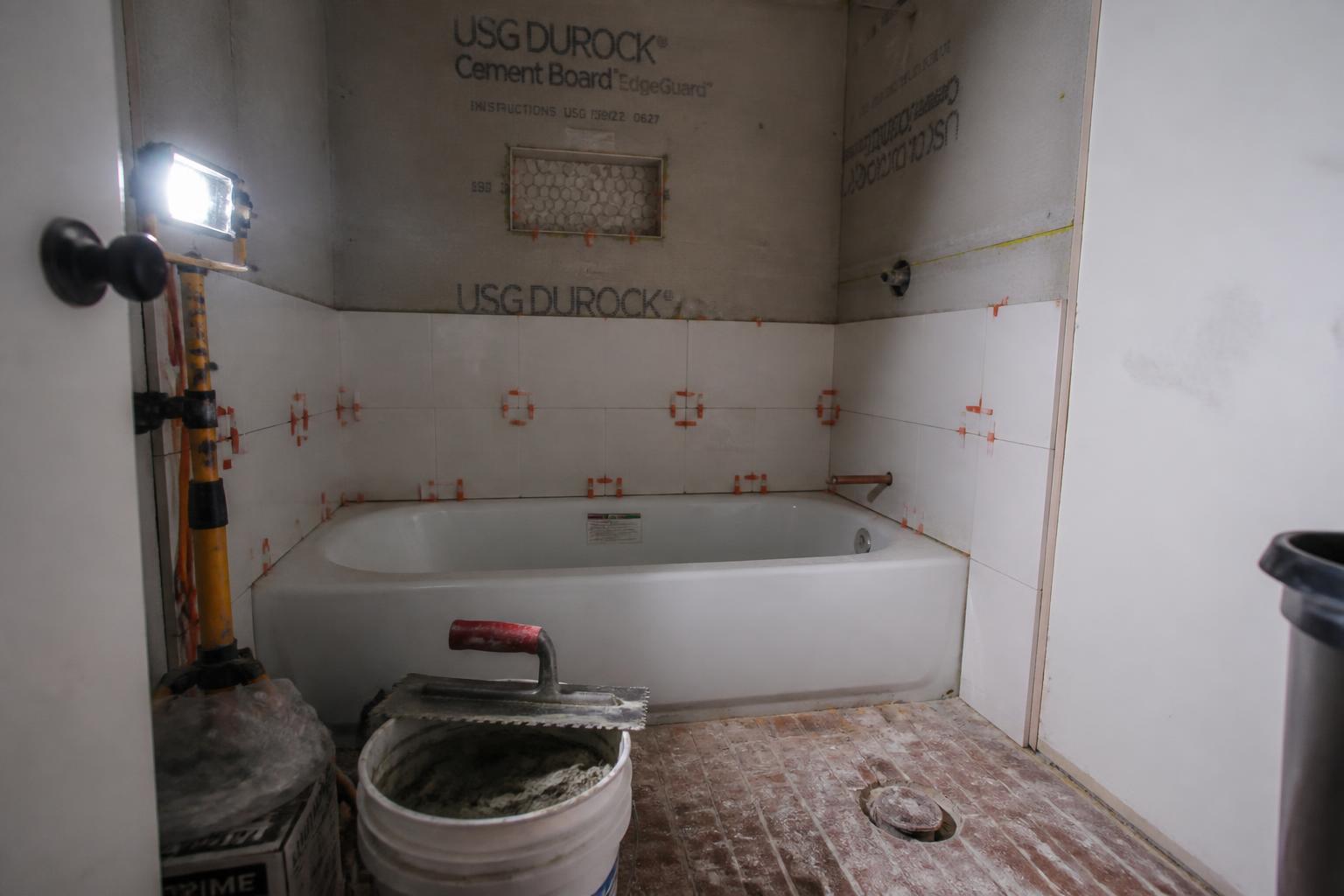
A mid-range full remodel takes the room to the studs but keeps the layout. The tub or shower is replaced, the floor and wall tile are new, the subfloor gets inspected and repaired, and electrical is often brought current with GFCI protection and a properly sized exhaust fan. Expect two to four weeks of work and one to three weeks of prior lead time for ordering materials.
A layout change or primary suite gut is a different animal. Once the toilet flange, shower drain, or tub location moves, the floor is opened, drain lines are re-pitched, and inspections enter the schedule. Add a freestanding tub, a curbless tiled shower with a linear drain, heated floors, and a double vanity, and the number climbs quickly.
| Scope | Typical total cost | Timeline |
|---|---|---|
| Powder room refresh | $2,000 – $5,000 | 2 – 5 days |
| Cosmetic refresh (hall bath) | $3,000 – $7,000 | 3 – 7 days |
| Mid-range full remodel, same layout | $10,000 – $25,000 | 2 – 4 weeks |
| Layout change with moved plumbing | $20,000 – $40,000 | 4 – 6 weeks |
| Primary suite gut, custom tile | $25,000 – $60,000+ | 5 – 10 weeks |
Where the Money Actually Goes
Homeowners consistently underestimate labor and overestimate fixtures. A $400 toilet feels expensive at the store, but it is a rounding error next to two weeks of a tile setter's time. In a typical mid-range remodel, labor absorbs 40 to 65 percent of the budget, and the tile portion alone can be a third of that labor.
Tile is priced by complexity, not just area. A straightforward 12x24 wall tile in a standard alcove shower installs quickly. Herringbone, mosaic niches, shower benches, curbless entries, and full-height tile to a nine-foot ceiling all multiply setter hours. If two bids are far apart, tile layout is one of the first places to look for the difference.
Plumbing rough-in is where the layout decision shows up on the invoice. Keeping fixtures in place may involve only a shower valve swap. Relocating a toilet three feet can mean cutting concrete or re-framing floor joists to re-pitch a drain line, which drags in framing, inspection, and floor repair.
Electrical is a quiet line item. Modern code expects GFCI protection, dedicated circuits for some equipment, correct fixture ratings in wet locations, and an exhaust fan sized to the room and vented outdoors — not into the attic. In an older home, bringing a bathroom current is often unavoidable once a permit is pulled.
- Labor: 40–65% of total project cost
- Tile and stone material: 8–15%
- Vanity, counter, and cabinetry: 10–20%
- Plumbing fixtures and valves: 8–15%
- Permits, disposal, and protection: 3–8%
Cost per Square Foot — and Why It Misleads
Bathrooms commonly land between $200 and $500 per square foot for a full remodel, which is far higher than a kitchen on a per-foot basis. The reason is density: a 40-square-foot room can contain plumbing supply and drain lines, ventilation, electrical, waterproofing, tile, glass, cabinetry, and three separate fixtures. There is no filler space to dilute the cost.
That density is also why small bathrooms rarely feel cheap. Halving the floor area does not halve the number of trades, the number of trips, or the number of inspections. A tiny bathroom with a custom tiled shower can cost nearly as much as one twice the size finished with a prefabricated unit.
The Decisions That Save the Most Money
Keep the plumbing where it is. This is worth thousands and is almost always the biggest single lever available. A skilled designer can transform how a bathroom feels without relocating a single drain.
Choose a quality prefabricated or solid-surface shower pan instead of a fully mud-set custom base if budget matters more than the tiled look. The waterproofing is more predictable and the labor is a fraction.
Refinish rather than replace when the tub is structurally sound and only the surface is dated. Professional reglazing typically costs a few hundred dollars against a few thousand for replacement plus surrounding tile repair.
Standardize sizes. A stock 60-inch vanity in a common width costs a fraction of a custom cabinet built to fit an odd wall, and it ships in days rather than months.
Do not economize on the parts you cannot see. Waterproofing membrane, a properly sized and vented exhaust fan, quality valves, and correct backer board are the difference between a bathroom that survives fifteen years and one that grows mold behind the tile in three.
Permits, Timelines, and Living Through It
Cosmetic swaps rarely require a permit. Anything that moves plumbing or alters electrical circuits usually does, and inspections add calendar days even when they add few labor hours. Skipping a required permit can create real problems at resale, and some insurers push back on claims tied to unpermitted work.
If the house has only one bathroom, plan for it. Confirm the shutoff schedule with your contractor, arrange showers elsewhere, and understand that a rough-in inspection may sit in a queue for several days. Homeowners who feel trapped mid-project are the ones most likely to pressure a crew into rushing waterproofing, which is exactly the wrong place to hurry.
Order everything before demolition begins. Tile from a single dye lot, a specific vanity finish, or a special-order glass enclosure can carry lead times measured in weeks. A crew standing idle waiting on a shower door is expensive in both money and goodwill.
How to Compare Bathroom Bids Fairly
Give every contractor the same scope in writing: exact fixtures, tile size and pattern, whether the shower is prefabricated or fully tiled, who supplies the materials, and whether the layout changes. Bids priced against different assumptions are not comparable, no matter how detailed they look.
Ask each bid to break out demolition and disposal, plumbing, electrical, waterproofing, tile labor, cabinetry, fixtures, and permits. Ask specifically what happens if the subfloor is rotted — a good contractor will name a unit price rather than promise it will be fine.
For a broader walkthrough of reading estimates, see our guide on how to compare home improvement estimates and the questions to ask before hiring a contractor.
When you are ready for numbers on your own bathroom, describe the project once through Home Services Pro USA and we will match you with local pros, or start from our bathroom remodeling page.
Frequently Asked Questions
- How much does a small bathroom remodel cost?
- A small hall or guest bathroom typically costs $6,000 to $15,000 for a full remodel that keeps the existing layout, or $3,000 to $7,000 for a cosmetic refresh that replaces the vanity, toilet, fixtures, and flooring without opening walls.
- How long does a bathroom remodel take?
- A cosmetic refresh takes three to seven days. A full remodel with the same layout usually takes two to four weeks. Moving plumbing or building a custom tiled shower extends the timeline to five to ten weeks including inspections.
- Is a bathroom remodel worth it?
- Mid-range bathroom remodels typically recoup roughly 55 to 70 percent of their cost at resale, and updated bathrooms strongly influence buyer perception. Cosmetic refreshes generally return a higher percentage than luxury gut renovations.
- What is the most expensive part of a bathroom remodel?
- Labor is the largest share, and within labor, custom tile work is usually the single biggest line. Relocating plumbing fixtures is the change most likely to push a project into the next price tier.
- Do I need a permit to remodel a bathroom?
- Replacing fixtures in place typically does not require a permit. Moving plumbing lines, altering electrical circuits, or changing walls almost always does. Your contractor should pull the permit and meet the inspector.