
Deck Building Cost: Wood vs. Composite Prices per Square Foot
A new deck runs $25 to $65 per square foot installed. Here's the real wood-vs-composite math, what drives labor, and the upgrades worth paying for.
10 min read · Home Services Pro USA
Quick answer
Most U.S. homeowners spend $8,000 to $20,000 to build a new deck, with a national midpoint near $12,000 for a 300-square-foot deck. Installed pricing runs $25 to $45 per square foot for pressure-treated wood, $35 to $55 for cedar, and $45 to $65 for composite. Elevated decks, stairs, and premium railings push costs higher. Labor is typically 50 to 65 percent of the total.
Key Takeaways
- Pressure-treated wood deck: $25–$45 per sq ft installed. Cedar: $35–$55. Composite: $45–$65.
- A typical 12x24 (288 sq ft) composite deck lands at $13,000 to $19,000 installed.
- Composite costs 40 to 60 percent more upfront but eliminates staining and sealing — the break-even is often year 7 to 10.
- Second-story decks cost 25 to 50 percent more than ground-level due to footings, bracing, and stairs.
- Railing is priced per linear foot and adds up fast — it's often 15 to 25 percent of the total budget.
Deck Cost by Material: The Real Math
Decking material is the biggest decision in the project, and the honest comparison includes maintenance, not just the install price. Pressure-treated lumber is the budget standard at $25 to $45 per square foot installed. It's structurally sound and widely available, but it needs cleaning and staining or sealing every one to three years, and boards will cup, split, and check over time.
Cedar runs $35 to $55 per square foot installed. It's naturally rot- and insect-resistant, stays cooler underfoot, and looks better than treated pine — but it's softer, dents more easily, and still needs regular sealing to keep its color.
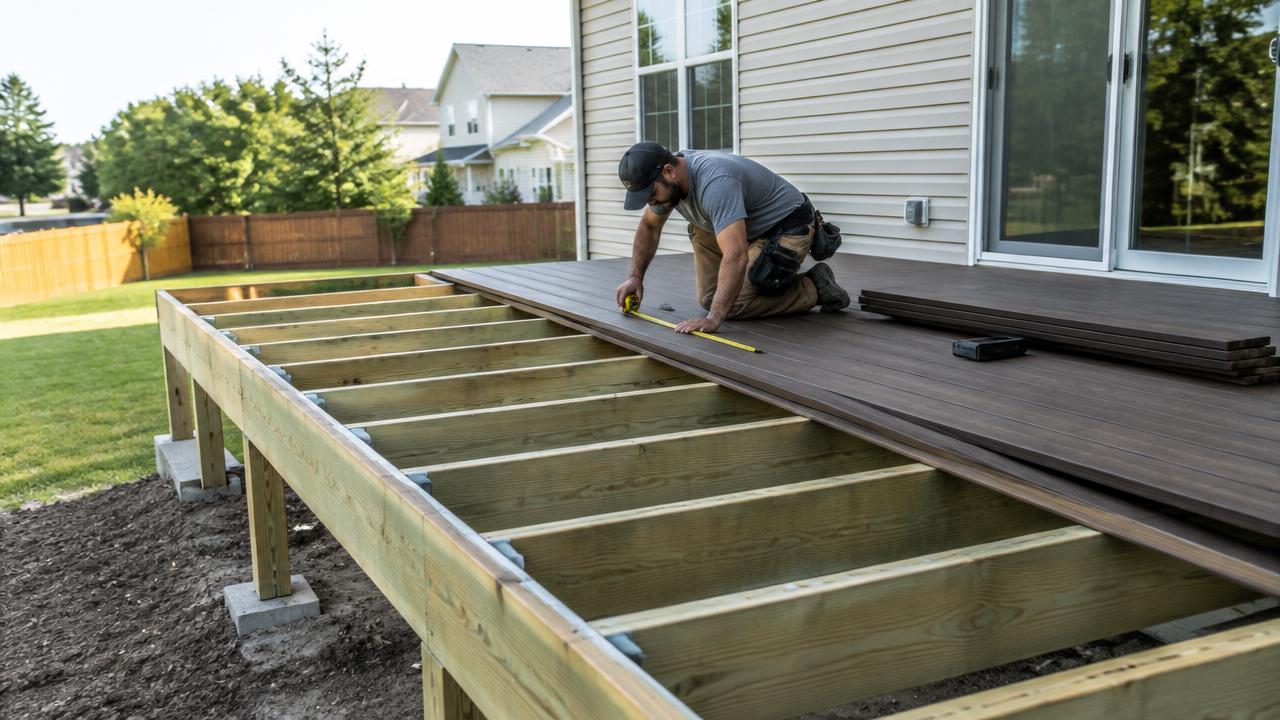
Composite decking (Trex, TimberTech, and similar) runs $45 to $65 per square foot installed. The boards never need staining, won't splinter or rot, and carry 25-to-50-year fade-and-stain warranties. The framing underneath is still pressure-treated lumber, so the structure is identical — only the surface and railing change.
The break-even math: a 300-square-foot composite deck might cost $4,000 to $6,000 more than treated wood upfront. Wood deck maintenance (materials plus your time or hired labor) commonly runs $500 to $1,000 every two years. The composite premium typically pays for itself in year 7 to 10 — sooner if you value your weekends.
| Material | Cost per sq ft | 300 sq ft total | Maintenance |
|---|---|---|---|
| Pressure-treated pine | $25 – $45 | $7,500 – $13,500 | Stain/seal every 1–3 years |
| Cedar | $35 – $55 | $10,500 – $16,500 | Seal every 2–3 years |
| Composite | $45 – $65 | $13,500 – $19,500 | Wash occasionally |
| PVC (capped polymer) | $50 – $70 | $15,000 – $21,000 | Wash occasionally |
| Exotic hardwood (ipe) | $55 – $85 | $16,500 – $25,500 | Oil annually for color |
Where the Money Goes Beyond the Boards
Homeowners focus on decking, but the structure underneath is where safety and much of the cost live. Footings must be dug below the frost line — 12 inches in parts of the South, 48 inches in the upper Midwest — and each footing is inspected before concrete is poured in most jurisdictions. Ledger attachment to the house is the most failure-prone detail in deck construction; proper flashing and through-bolts are non-negotiable.
Elevation changes everything. A ground-level or low platform deck is the pricing baseline. A second-story deck needs deeper footings, taller posts, lateral bracing, longer stairs, and often an engineer's details — expect 25 to 50 percent more than the same square footage at grade.
Railing is priced per linear foot and quietly becomes one of the largest line items. Basic pressure-treated railing runs $20 to $35 per linear foot; composite railing $40 to $60; cable rail and aluminum $60 to $120. On a deck with 60 linear feet of railing, that's a $1,200 to $7,000 decision.
Stairs, skirting, built-in benches, pergolas, and lighting each add hundreds to thousands. A single set of code-compliant stairs typically runs $500 to $1,500 depending on height and material.
- Labor: 50–65% of total project cost
- Framing lumber and footings: 15–25%
- Decking surface: 15–30%
- Railing: 15–25%
- Stairs, permits, and extras: 5–15%
Permits, Codes, and Why They Matter
Nearly every attached deck requires a building permit — typically $100 to $500 — and inspections at the footing and final stages. Code governs footing depth, ledger attachment, joist spacing, guardrail height (36 to 42 inches), baluster spacing (the 4-inch sphere rule), and stair geometry. These rules exist because deck collapses injure people every year, almost always at the ledger or the railing.
An unpermitted deck can surface painfully at resale: appraisers and buyers' inspectors flag them, and some municipalities can require retroactive permits or removal. A reputable builder handles the permit and inspections as a matter of course — treat any suggestion to skip the permit as a serious warning sign.
How to Compare Deck Building Quotes
Deck quotes should specify the exact decking product and line (composite lines vary enormously in price), joist spacing (16 inches on center is standard; 12 inches for diagonal layouts or some composites), footing depth and count, railing system, stair count, and whether permit fees and inspections are included.
Ask each builder for photos of decks they built at least three years ago — that's when shortcuts in flashing and fastening start showing. Verify licensing and insurance, and compare the bids line by line with our guide on how to compare home improvement estimates.
When you're ready, get matched with local deck builders through Home Services Pro USA — free estimates, no obligation.
Frequently Asked Questions
- How much does it cost to build a 12x24 deck?
- A 12x24 deck (288 square feet) costs $7,200 to $13,000 in pressure-treated wood, $10,000 to $16,000 in cedar, and $13,000 to $19,000 in composite, installed. Elevated decks, stairs, and upgraded railings push costs 25 to 50 percent higher.
- Is composite decking worth the extra cost?
- For most homeowners who plan to stay in the home 7+ years, yes. Composite costs 40 to 60 percent more upfront but eliminates staining and sealing, which typically costs $500 to $1,000 every two years for wood. The break-even point is usually year 7 to 10, and composite carries 25-to-50-year warranties.
- Do I need a permit to build a deck?
- Almost always yes for attached decks. Permits typically cost $100 to $500 and include footing and final inspections. Skipping the permit risks problems at resale and can mean removal orders in strict jurisdictions.
- How long does it take to build a deck?
- A straightforward ground-level deck takes a professional crew 3 to 7 working days once materials are on site. Elevated or complex decks run 2 to 3 weeks. Add 2 to 6 weeks of lead time for design, permits, and material ordering before construction starts.