
Roof Replacement Cost: What Homeowners Actually Pay
Typical price ranges by material and roof size, what drives the number up or down, and how to read a roofing estimate before you sign.
9 min read · Home Services Pro USA
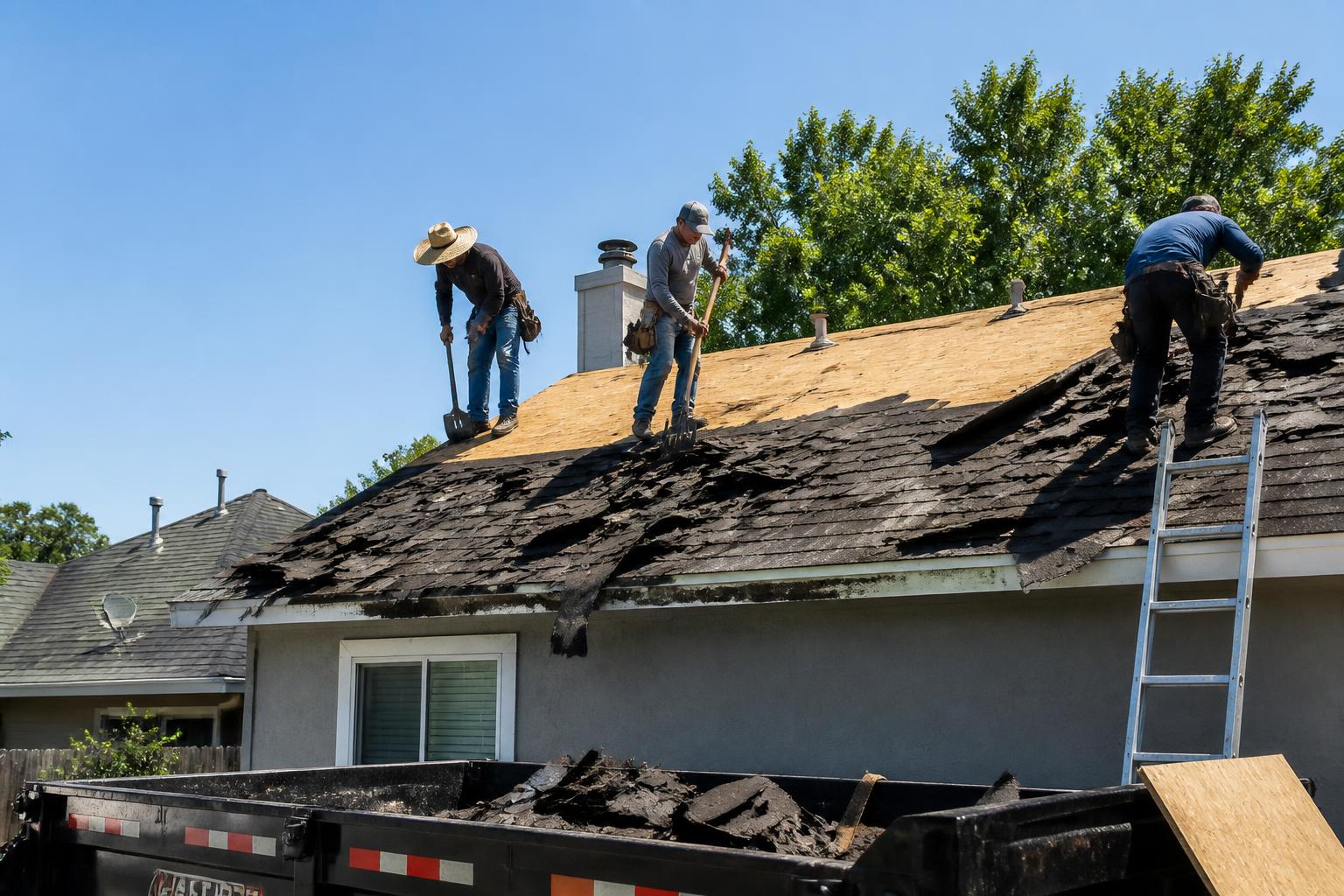
Quick answer
Most U.S. homeowners pay roughly $6,000 to $18,000 to replace an asphalt shingle roof on a typical single-family home, or about $4.50 to $9.00 per square foot installed. Metal, tile, and slate roofs commonly run two to five times higher. Roof size, pitch, layers to tear off, decking condition, and local labor rates drive nearly all of the variation.
Key Takeaways
- Asphalt shingle replacement usually lands between $4.50 and $9.00 per square foot installed.
- Tear-off of a second layer, steep pitch, and rotted decking are the three most common cost surprises.
- A useful estimate separates materials, labor, tear-off and disposal, permits, and flashing work.
- Get three written quotes with the same scope so you compare like with like.
What a New Roof Costs in Plain Numbers
Roofing is priced per "square" — a 100-square-foot area of roof surface. A 2,000-square-foot single-story home with a simple gable roof usually has about 22 to 26 squares once overhangs and pitch are accounted for. That is why two homes with identical living space can carry very different roofing bills: a steep, cut-up roof with dormers, valleys, and skylights has far more surface and far more detail work than a plain rectangle.
For architectural asphalt shingles — the default choice on most American homes — a realistic installed range is $4.50 to $9.00 per square foot, which puts a typical replacement somewhere between $6,000 and $18,000. Three-tab shingles sit at the low end and are increasingly rare on replacements because the price gap has narrowed while the lifespan gap has not.
Premium materials change the math entirely. Standing-seam metal typically runs $10 to $18 per square foot installed, concrete or clay tile $12 to $25, and natural slate $18 to $40 or more. Those materials also require crews with specific experience and often structural review, so the pool of qualified installers in your market affects the price as much as the material itself.
| Material | Cost per sq. ft. | Typical lifespan |
|---|---|---|
| 3-tab asphalt shingle | $3.50 – $5.50 | 15 – 20 years |
| Architectural asphalt shingle | $4.50 – $9.00 | 25 – 30 years |
| Standing-seam metal | $10 – $18 | 40 – 70 years |
| Concrete or clay tile | $12 – $25 | 50+ years |
| Natural slate | $18 – $40+ | 75 – 100 years |
The Five Factors That Move Your Quote the Most
Roof size and pitch come first. A pitch steeper than 6:12 usually requires staging, harnesses, and slower work, and most roofers add a steep-slope charge that can raise labor by 20 to 50 percent. Anything over 9:12 is effectively a specialty job.
Tear-off and layers come second. Removing one layer of shingles is normal and usually built into the quote. Removing a second or third layer adds labor and dumpster weight. Some municipalities cap the number of layers permitted, which means a homeowner who saved money on an overlay a decade ago pays for it now.
Decking condition is the classic mid-project surprise. Sheathing under old flashing, valleys, and chimney penetrations is frequently soft. Good contractors quote a per-sheet price for replacement decking up front — commonly $70 to $150 per sheet installed — so the change order is predictable instead of negotiated on the roof.
Flashing, ventilation, and penetrations are the details that separate a durable roof from a callback. New step flashing at walls, counterflashing at chimneys, pipe boots, and properly balanced intake and exhaust ventilation should all be line items. If a bid is dramatically cheaper than the others, reused flashing is one of the first places to look.
Finally, access and location matter. Steep driveways, tight lots, second-story-only access, and long material carries all add labor hours, and regional labor rates can differ by 40 percent or more between metro and rural markets.
- Roof size measured in squares, not house square footage
- Pitch and walkability
- Number of existing layers to remove
- Decking repair allowance and per-sheet price
- Flashing, ventilation, and penetration details
Repair or Replace? A Practical Decision Framework
A roof with localized storm damage and years of remaining life is usually a repair. A roof with widespread granule loss, curling across multiple slopes, several active leaks, or an age within a few years of its rated lifespan is usually a replacement. The in-between cases are where homeowners lose money by patching repeatedly.
A simple test: if the cost of repairs over the next three years is likely to exceed 30 percent of a full replacement, replacing now almost always wins, because each repair carries its own mobilization cost and none of it extends the roof's overall lifespan.
If you are still deciding, our guide on signs your roof needs attention walks through what to look for from the ground, from the attic, and after a storm.
Insurance, Storm Damage, and Timing
In hail and high-wind regions, a meaningful share of roof replacements are paid partly by insurance. Policies commonly distinguish between replacement cost value and actual cash value, and the difference on a ten-year-old roof can be thousands of dollars. Read your declarations page before a storm, not after.
Most policies also have filing deadlines measured from the date of loss. If a major hail or wind event hits your area, schedule an inspection promptly even if you see no damage from the driveway — bruised shingles and creased tabs are often invisible from the ground.
Be cautious with any company that appears at your door immediately after a storm, offers to "handle the deductible," or asks you to sign an assignment of benefits before an adjuster has seen the roof. Waiving a deductible is illegal in many states, and it is a reliable signal of a company you do not want on your roof.
On timing: late spring through early fall is peak season in most of the country, which means higher demand and longer lead times. Late fall and winter installs are possible in moderate climates and sometimes carry off-season pricing, but asphalt shingles need adequate temperature to seal properly.
How to Read a Roofing Estimate Line by Line
A trustworthy roofing estimate is specific enough that a second contractor could execute it without asking questions. It should name the shingle manufacturer and product line, the underlayment type, the ice-and-water shield coverage at eaves and valleys, the ventilation plan, and the flashing that will be replaced rather than reused.
It should also state the warranty clearly, and separate the manufacturer's material warranty from the contractor's workmanship warranty. Material warranties are often prorated; workmanship warranties from a company that has been in business two years are worth less than the paper they are printed on.
Payment terms deserve equal attention. A deposit for material ordering is normal. Paying the full contract price before the dumpster arrives is not. Tie the final payment to a completed punch list and a clean magnetic nail sweep of the property.
Our broader guide on how to compare home improvement estimates covers the same discipline across every trade, and the questions to ask before hiring a contractor checklist is worth running before you sign anything.
Getting Accurate Quotes Without the Runaround
The fastest way to a realistic number is three written quotes from licensed, insured local roofers who have physically been on or measured your roof. Aerial-measurement-only quotes are fine for a ballpark but should be confirmed before contract.
Give every contractor the same information: your address, roof age if known, any known leaks, whether you have had prior storm claims, and your timeline. Consistent inputs produce comparable outputs.
If you would rather not cold-call companies, describe your project once through Home Services Pro USA and we will match you with roofing professionals who serve your area. You can also start directly from our roofing services page or browse all home service categories.
Frequently Asked Questions
- How much does it cost to replace a 2,000 square foot roof?
- Most homeowners pay roughly $9,000 to $18,000 for an architectural asphalt shingle replacement on a 2,000-square-foot home, depending on pitch, layers removed, decking repairs, and local labor rates.
- How long does a roof replacement take?
- A typical asphalt shingle roof on a single-family home takes one to three working days. Metal, tile, and slate roofs, complex rooflines, and significant decking repairs extend that to a week or more.
- Can I put new shingles over an old roof?
- Some jurisdictions allow one overlay, but it hides decking problems, shortens the life of the new shingles, and adds weight. Full tear-off is the standard recommendation and is required in many areas.
- Does homeowners insurance pay for a new roof?
- Insurance typically covers sudden damage from covered perils such as hail or wind, not wear and age. Whether you receive replacement cost or depreciated actual cash value depends on your specific policy.
- What time of year is cheapest to replace a roof?
- Late fall and winter are the slowest seasons for most roofing companies in moderate climates, and some offer off-season pricing. Shingles still need adequate temperature to seal, so extreme cold is not ideal.