
Window Replacement Cost: Prices per Window and Whole-House Ranges
What replacement windows cost by material and style, when insert windows beat full-frame, and how to read an in-home window quote without pressure.
10 min read · Home Services Pro USA
Quick answer
Replacement windows typically cost $450 to $1,200 installed per window for standard vinyl double-hung units, with most whole-house projects running $8,000 to $25,000 for 10 to 20 windows. Wood, fiberglass, and large specialty shapes push individual windows to $1,200 to $3,000 or more installed.
Key Takeaways
- Vinyl is the value standard at roughly $450–$1,000 installed per window; fiberglass and wood run 1.5 to 3 times higher.
- Insert (pocket) replacement is cheaper and faster; full-frame replacement is required when the frame or sill is rotted.
- Glass package — double vs triple pane, low-E coatings, argon fill — matters more for comfort than the frame brand.
- Energy savings alone rarely pay back a whole-house project quickly; comfort, noise, and operation are the honest reasons.
- Be skeptical of one-day-only pricing and quotes that will not break out price per window.
Installed Cost per Window by Material
Window pricing is almost always quoted per opening, installed. That number bundles the unit itself, removal of the old window, flashing and sealing, interior and exterior trim work, and disposal. Comparing a manufacturer's list price against a competitor's installed price is the fastest way to misjudge a bid.
Vinyl dominates the American replacement market because it delivers solid thermal performance at the lowest price with essentially no maintenance. Fiberglass costs more but expands and contracts at nearly the same rate as glass, which helps seal longevity in climates with large temperature swings. Wood and clad-wood remain the choice where historic character or interior aesthetics justify the premium and the upkeep.
| Frame material | Installed cost per window | Notes |
|---|---|---|
| Vinyl | $450 – $1,000 | Best value; no painting; broad size range |
| Composite | $700 – $1,400 | Stiffer than vinyl, good for large openings |
| Fiberglass | $900 – $1,800 | Excellent stability; strong in extreme climates |
| Aluminum | $600 – $1,300 | Slim sightlines; weaker thermally without a thermal break |
| Wood / clad-wood | $1,000 – $2,500+ | Premium look; requires maintenance |
Style Changes the Price as Much as Material
A double-hung window is the American default and is priced accordingly. Casements, which crank outward, cost more because of the hardware and generally seal tighter. Sliders are usually the cheapest operating style. Picture windows are inexpensive per square foot because nothing moves, but large ones get heavy enough to require additional installers.
Specialty shapes — arches, octagons, trapezoids over a stair landing — are custom-fabricated and priced accordingly. Bay and bow assemblies are effectively small structures: they involve framing, a roof or head board, seat board, insulation, and sometimes cable support, so a single bay can cost $2,500 to $6,000 installed.
- Slider: lowest operating-style cost
- Double-hung: the volume standard most quotes assume
- Casement: 10–25% more than double-hung, best air sealing
- Picture / fixed: low cost per square foot, high cost when oversized
- Bay or bow: $2,500–$6,000+ installed as an assembly
Insert vs Full-Frame Replacement
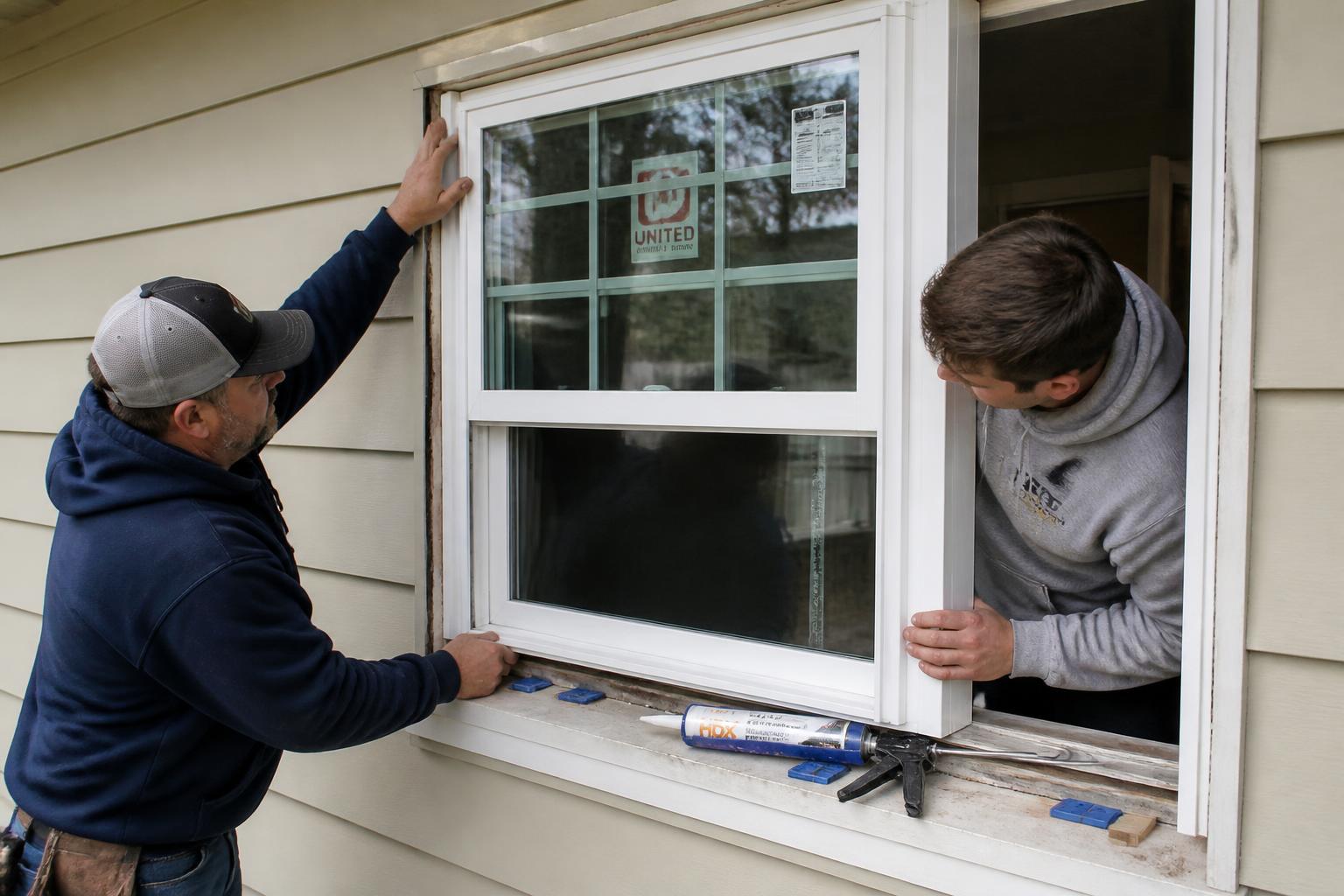
An insert or pocket replacement sets a new window inside the existing frame after removing only the sashes and stops. It is faster, cheaper, keeps interior and exterior trim intact, and is entirely appropriate when the existing frame and sill are sound. The trade-off is a slightly smaller glass area, since the new frame nests inside the old one.
A full-frame replacement removes everything down to the rough opening. It is the right call when there is rot, water intrusion, failing sills, or when you want to change the window size or restore lost glass area. It also allows proper flashing and insulation at the rough opening, which is the part of the installation most responsible for long-term performance.
A contractor who inspects sills and interior casing before quoting is doing the job right. A contractor who quotes insert replacement sight-unseen for an entire house is guessing, and guesses turn into change orders once the first sash comes out.
Glass, Ratings, and What Actually Improves Comfort
Frame material gets the marketing attention, but the glass package determines how the room feels. Look for two numbers on the NFRC label: U-factor, which measures heat loss (lower is better), and Solar Heat Gain Coefficient, which measures how much solar heat enters (lower is better in hot, sunny climates; a moderate number can be desirable in cold northern climates on south-facing walls).
Double-pane glass with a low-E coating and argon fill is the practical standard for most of the country. Triple-pane adds meaningful benefit in severe cold and for noise reduction near busy roads, but it also adds weight and cost, and in mild climates the payback rarely justifies it on energy grounds alone.
Warm-edge spacers, quality weatherstripping, and correct installation matter more than most buyers expect. A premium window installed with gaps and expanding foam in the wrong places will underperform a mid-tier window installed carefully with proper flashing and backer rod.
Will New Windows Pay for Themselves?
Honest answer: usually not on energy savings alone within a short horizon. Replacing single-pane windows with modern double-pane low-E units in a cold climate can cut heating and cooling costs noticeably, but a whole-house project costing $15,000 against a few hundred dollars of annual savings has a long simple payback.
The real returns are comfort and livability: no cold draft along the sofa, no condensation pooling on the sill, rooms that stay usable in winter, meaningfully less street noise, and windows that actually open, close, and lock. Resale value tends to reflect the visual and functional upgrade more than a projected utility figure.
Federal energy-efficiency tax credits and local utility rebates change over time. Check current program terms before assuming an incentive amount, and ask your contractor which products are certified for the program you intend to claim.
Red Flags in Window Sales
Window replacement has more high-pressure sales activity than almost any other home improvement category. Treat a price that expires when the salesperson leaves your kitchen table as a reason to slow down, not speed up. Legitimate pricing survives a night's sleep.
Insist on a per-window price, the exact product line and series, the glass package, whether the installation is insert or full-frame, and what happens if rot is discovered. Ask who performs the installation — employees or subcontracted crews — and who honors the labor warranty in five years.
Get three quotes, and compare the same number of openings with the same installation method. Our guides on comparing home improvement estimates and what to ask before hiring apply directly here.
When you want local numbers, describe the project once through Home Services Pro USA or start from our window replacement page.
Frequently Asked Questions
- How much does it cost to replace 10 windows?
- Ten standard vinyl double-hung replacement windows typically cost $5,000 to $10,000 installed. The same ten openings in fiberglass or clad-wood commonly run $10,000 to $20,000, and specialty shapes or second-story access add more.
- Is it cheaper to replace all windows at once?
- Yes, usually. Contractors price per-window labor lower on larger jobs because mobilization, setup, and disposal are shared across more openings. Doing a whole house at once often saves 10 to 20 percent versus replacing a few at a time.
- How long do replacement windows last?
- Quality vinyl and fiberglass windows generally last 20 to 40 years. Insulated glass seals typically carry 10 to 20 year warranties; a failed seal shows up as permanent fog between panes and usually means replacing the sash or glass unit, not the whole window.
- Should I replace windows in winter?
- Yes, it is normally fine. Crews replace one opening at a time and the house is never fully open. Winter is often the slower season, so scheduling is easier and some companies discount, though extreme cold can affect sealants and adhesives.
- Do new windows increase home value?
- Window replacement typically recoups roughly 60 to 70 percent of its cost at resale and strongly affects buyer impression, especially when the existing windows are single-pane, painted shut, or visibly failing.