
Siding Replacement Cost: Prices by Material and Home Size
Vinyl, fiber cement, engineered wood, and more — what each costs installed, how square footage is calculated, and what a complete siding quote should include.
9 min read · Home Services Pro USA
Quick answer
Siding replacement typically costs $6 to $16 per square foot installed. For an average 1,500 to 2,500 square foot home that means roughly $9,000 to $28,000. Vinyl is the least expensive at $4 to $9 per square foot installed, fiber cement runs $9 to $16, and natural wood or stone veneer can exceed $20.
Key Takeaways
- Vinyl: $4–$9/sq ft installed. Engineered wood: $7–$13. Fiber cement: $9–$16. Metal: $8–$16.
- Siding is quoted by wall area, not house floor area — a two-story home has far more wall than its footprint suggests.
- Tear-off, house wrap, trim, soffit, and fascia are separate line items that can add 20 to 40 percent.
- Rotted sheathing is the most common change order; ask for a per-sheet price up front.
- Fiber cement offers the best durability-per-dollar in most climates; vinyl wins on upfront cost and maintenance.
How Siding Is Measured and Priced
Contractors price siding by wall square footage, calculated by measuring each wall's height and width, adding gables, and subtracting large openings. Many crews do not deduct small windows, because the cutting labor around an opening offsets the material saved. Siding is ordered by the "square" — 100 square feet — just like roofing.
This is why a 1,600-square-foot two-story home can require more siding than a 2,200-square-foot ranch: taller walls, more gable area, and second-story access requirements. Multi-story work also means staging, ladders or lifts, and slower installation, all of which land in the labor line.
Complexity matters as much as area. Dormers, bump-outs, multiple gables, decorative shake accents, and mixed materials all raise labor per square foot. A simple rectangular two-story house is the cheapest thing a siding crew can wrap.
| Material | Installed cost per sq. ft. | Expected lifespan |
|---|---|---|
| Vinyl | $4 – $9 | 20 – 40 years |
| Insulated vinyl | $7 – $12 | 25 – 40 years |
| Engineered wood | $7 – $13 | 20 – 30 years |
| Fiber cement | $9 – $16 | 30 – 50 years |
| Metal (steel or aluminum) | $8 – $16 | 30 – 50 years |
| Natural cedar | $9 – $20 | 20 – 40 years with upkeep |
| Stone or brick veneer | $18 – $35+ | 50+ years |
Choosing a Material
Vinyl remains the most common siding in America because it is inexpensive, never needs painting, and installs quickly. Modern premium vinyl is thicker and holds color far better than the products that gave the category a bad reputation decades ago. Its weaknesses are impact resistance and heat: it can crack in hard freezes and warp near reflective glass or grills.
Fiber cement is the durability favorite. It is noncombustible, resists insects and rot, holds paint well, and carries long warranties. It is heavy, requires specific cutting practices for dust control, and demands a crew experienced with proper clearances and flashing. Installed correctly, it is often the best long-term value in wildfire, hail, and high-humidity regions.
Engineered wood splits the difference — lighter than fiber cement, nail-friendly, warm-looking, and priced between vinyl and fiber cement. It relies heavily on proper installation and sealed cut edges to keep moisture out.
Metal siding, once mostly commercial, has grown in residential use for its fire resistance and clean modern lines. Steel resists hail better than aluminum; aluminum will not rust but dents easily.
What Belongs in a Complete Siding Quote
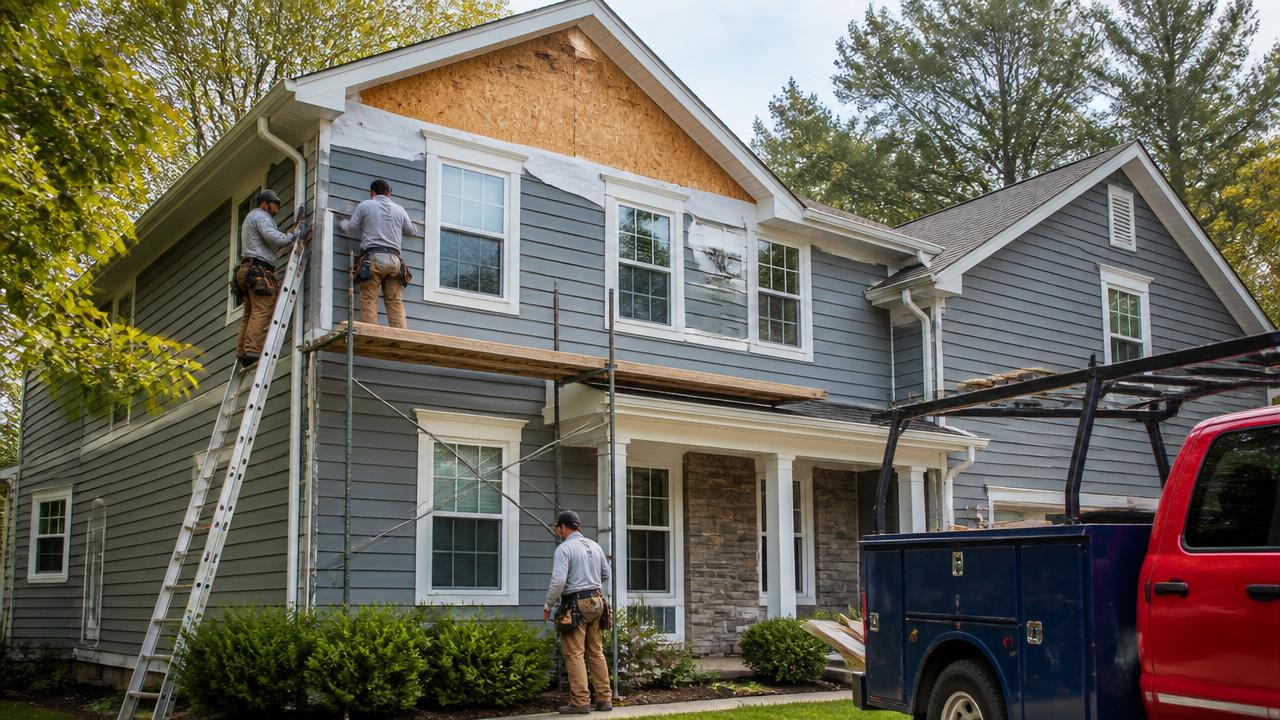
The siding panels themselves are only part of the job. A complete quote should identify tear-off and disposal of the existing siding, inspection and repair of the sheathing beneath, a weather-resistive barrier (house wrap) properly lapped and taped, flashing at windows, doors, and roof-to-wall intersections, and the trim package — corners, J-channel, window and door surrounds.
Soffit and fascia are frequently quoted as an option. Replacing them at the same time costs far less than coming back later, because the staging and access are already paid for.
Ask specifically how the crew handles the sheathing. Water damage behind old siding is common, especially below windows and at wall-to-roof junctions. A trustworthy quote names a per-sheet price for replacement OSB or plywood — typically $70 to $150 installed — so the change order is predictable.
- Tear-off and disposal of existing siding
- Sheathing inspection and a stated per-sheet repair price
- House wrap and properly integrated flashing
- Trim, corners, and window surrounds
- Soffit, fascia, and any gutter removal and re-hang
- Permit, cleanup, and magnetic nail sweep
Insulation, Energy, and Curb Appeal
Insulated vinyl and rigid foam under any siding add a modest R-value and, more importantly, reduce thermal bridging through studs. The energy improvement is real but rarely dramatic on its own. Where a siding project genuinely improves comfort is air sealing: a new weather-resistive barrier, correctly taped and flashed, stops the drafts that old siding assemblies leak.
On resale, siding is one of the strongest cosmetic returns in home improvement. Curb appeal is decided in the first seven seconds of a showing, and dated, chalking, or warped siding reads as deferred maintenance across the whole house.
Consider replacing siding at the same time as windows or gutters if all three are aging. Sequencing them together avoids paying twice for staging and produces much better flashing details at the intersections.
Repair or Full Replacement?
Localized damage — a few cracked vinyl panels, a rotted board near a downspout — is a repair. The complication is matching: vinyl colors are discontinued regularly and sun-faded existing siding rarely matches new stock exactly. Homeowners often source replacements from a less-visible wall to patch a front elevation.
Full replacement makes sense when damage is widespread, when there are multiple moisture entry points, when the siding is at the end of its life, or when hidden sheathing damage is suspected. Peeling paint that returns quickly, soft spots, interior wall staining, and pest intrusion all suggest the problem is behind the siding rather than on it.
Getting Accurate Quotes
Get three written quotes from licensed, insured siding contractors who have physically measured the house. Give each the same material spec, the same trim expectations, and the same scope on soffit, fascia, and gutters. Ask for the manufacturer's certification status, since some fiber cement and vinyl warranties depend on installer training.
Confirm workmanship warranty length separately from the material warranty, and read what prorating means in a 50-year product warranty — most reduce coverage sharply after the early years.
For general bid-reading strategy, see how to compare home improvement estimates. If gutters are coming off anyway, our gutter installation cost guide covers combining the work.
To get matched with siding professionals in your area, describe the project once through Home Services Pro USA or start from our siding page.
Frequently Asked Questions
- How much does it cost to side a 2,000 square foot house?
- Expect roughly $12,000 to $25,000 for vinyl on a 2,000-square-foot home and $20,000 to $40,000 for fiber cement, depending on wall area, number of stories, trim complexity, and how much sheathing needs repair.
- Is vinyl or fiber cement siding better?
- Fiber cement lasts longer, resists fire and impact better, and holds paint well, but costs roughly 50 to 100 percent more installed and needs repainting eventually. Vinyl costs less and never needs painting. Fiber cement is generally the better long-term value in hail, wildfire, or high-humidity regions.
- How long does siding installation take?
- Most single-family homes take one to two weeks. Larger or more complex homes, fiber cement installations, and jobs with significant sheathing repair can run three weeks or more.
- Can new siding go over old siding?
- It is sometimes done with vinyl over wood, but it hides moisture damage, complicates flashing, and can void warranties. Full tear-off is the standard recommendation because it lets the contractor inspect the sheathing and install a proper weather barrier.
- Does homeowners insurance cover siding replacement?
- Insurance typically covers sudden damage from covered perils such as hail, wind, or fire — not fading, age, or wear. Match-related coverage for undamaged walls varies significantly by policy and state.