
Tree Removal Cost: What You'll Pay by Tree Size and Type
How much it costs to remove, trim, or grind out a tree — plus emergency pricing, permits, and insurance questions.
10 min read · Home Services Pro USA
Quick answer
Most U.S. homeowners pay $400 to $2,000 to remove a tree, with a typical midpoint near $900. Small trees under 30 feet often cost $200 to $600, medium trees 30 to 60 feet cost $600 to $1,500, and large trees over 60 feet cost $1,500 to $4,000 or more. Stump grinding usually adds $100 to $400, and emergency removal can cost 1.5 to 3 times standard rates.
Key Takeaways
- Small tree (under 30 ft): $200–$600. Medium (30–60 ft): $600–$1,500. Large (60+ ft): $1,500–$4,000+.
- Stump grinding is often priced separately at $100–$400 per stump.
- Trees near houses, power lines, or fences cost more because limbs must be lowered in sections.
- Emergency storm removal often costs 1.5–3× normal rates.
- Always confirm liability and workers' compensation insurance — tree work is dangerous.
Tree Removal Cost by Size
Height is the biggest factor because taller trees take more time, more equipment, and more risk to bring down safely. Trunk diameter, branch spread, and wood density also matter.
| Tree size | Height | Typical cost | Examples |
|---|---|---|---|
| Small | Under 30 ft | $200 – $600 | Dogwood, crabapple, young maple |
| Medium | 30 – 60 ft | $600 – $1,500 | Elm, mature maple, birch |
| Large | 60 – 80 ft | $1,500 – $2,500 | Oak, pine, sweetgum |
| Very large | 80+ ft | $2,500 – $4,000+ | Mature oak, tulip poplar, redwood |
What Makes Tree Removal More Expensive
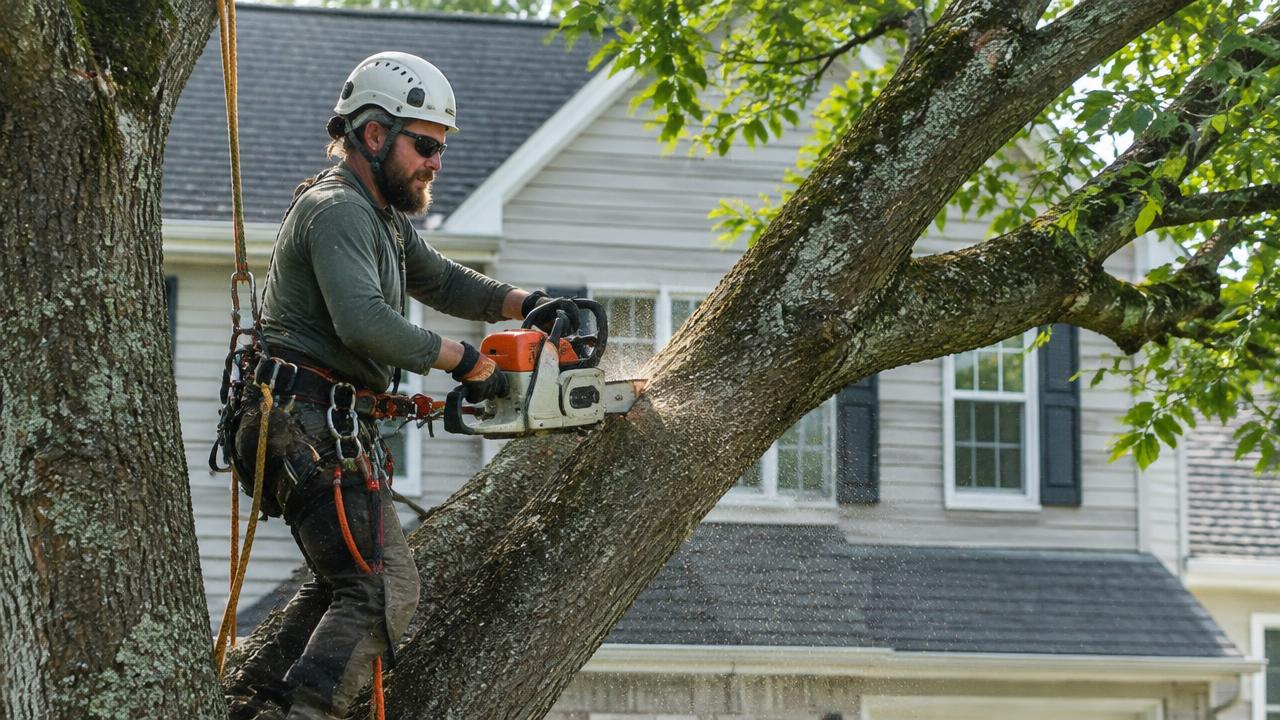
An open-field tree can be felled in one piece. A tree leaning over a roof must be climbed, rigged, and taken down in pieces, which can double the price.
- Proximity to houses, garages, fences, or power lines.
- Poor access that prevents bucket trucks or cranes from reaching the tree.
- Dead, diseased, or storm-damaged trees that are unstable to climb.
- Crane work for very large or hazardous trees: $500–$1,500+ per day.
- Haul-away versus leaving firewood-length logs on site.
- Local permits for protected species or trees above a certain diameter.
Stump Grinding and Removal
Most tree removal quotes leave a stump unless grinding is specified. Grinding a stump 6 to 12 inches below grade typically costs $100 to $400, or roughly $2 to $5 per inch of diameter, with minimums. Full stump and root-ball extraction is more invasive and can cost $300 to $1,000+.
Ask whether the quote includes cleanup of the grindings and backfilling with topsoil so you can plant grass.
Tree Trimming vs. Removal
Not every problem tree needs to come down. Pruning to remove dead wood, raise a canopy, or clear a roofline typically costs $200 to $1,000 depending on size. A certified arborist can assess whether a tree is structurally sound and recommend trimming, cabling, or removal.
Removal is usually the right call for dead trees, trees with major trunk decay or splits, trees leaning toward structures after storms, and trees whose roots are damaging foundations or sewer lines.
Emergency Tree Removal and Insurance
After storms, tree crews are in high demand and emergency rates often run 1.5 to 3 times normal pricing. If a tree falls on your house, garage, or fence, homeowners insurance often covers removal and repairs to the covered structure, typically subject to your deductible and policy limits. Removal of a fallen tree that didn't hit anything is often not covered.
Document damage with photos before work begins and contact your insurer promptly. Be cautious of storm-chasers who knock on doors demanding immediate cash payment. For roof damage from a fallen tree, see our restoration services and roofing pages.
How to Hire a Safe, Qualified Tree Service
Tree work is among the most dangerous trades. A poorly insured crew can leave you liable for injuries or property damage. Ask for certificates of liability and workers' compensation insurance, check for ISA-certified arborists on staff, and get the scope in writing: removal method, stump grinding, cleanup, and haul-away.
Get at least two or three quotes for anything above a small tree. Visit our tree service page for more details, or get matched with local tree professionals at no cost.
Frequently Asked Questions
- How much does it cost to cut down a large tree?
- Removing a large tree over 60 feet typically costs $1,500 to $4,000 or more, depending on location, access, and whether a crane is needed.
- Does homeowners insurance pay for tree removal?
- Often, if a tree falls on a covered structure such as your house or garage, subject to your deductible and limits. Removing a healthy tree preventively, or a fallen tree that hit nothing, is usually not covered. Check your specific policy.
- Do I need a permit to remove a tree on my property?
- It depends on your city. Many municipalities require permits for trees above a certain trunk diameter or for protected species. Your tree service or local planning office can confirm.
- Is stump grinding included in tree removal?
- Not always. Many companies price stump grinding separately at $100 to $400 per stump, so confirm it's in the written quote if you want it.